
Last updated November 16, 2026
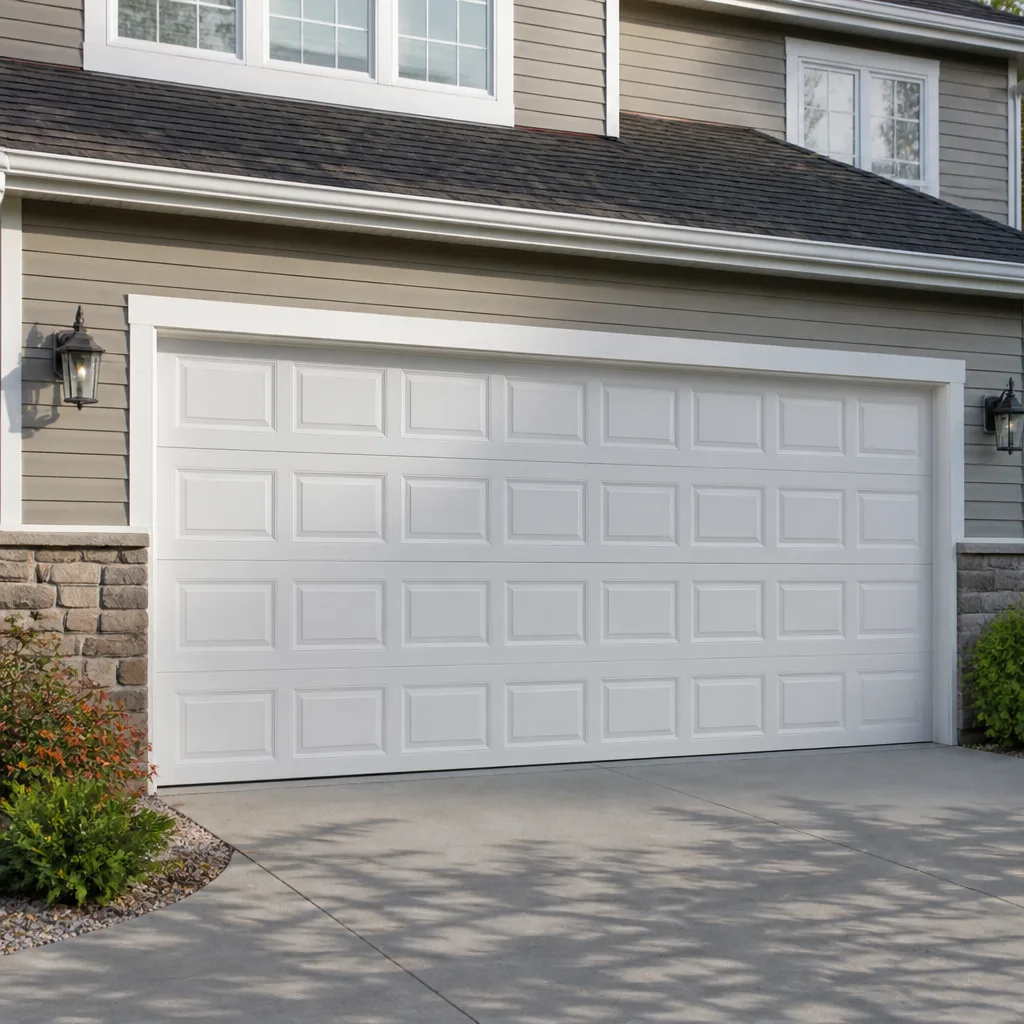 Raised-panel steel
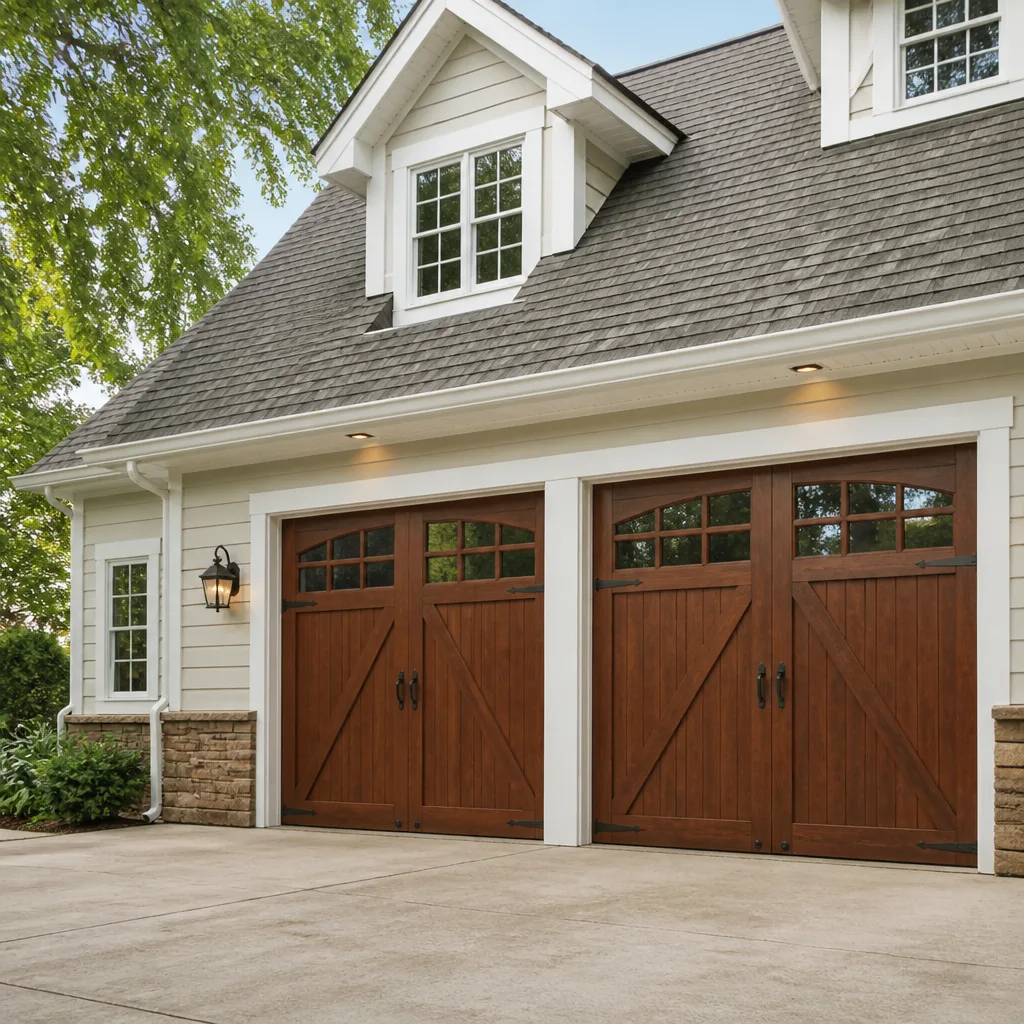 Carriage house
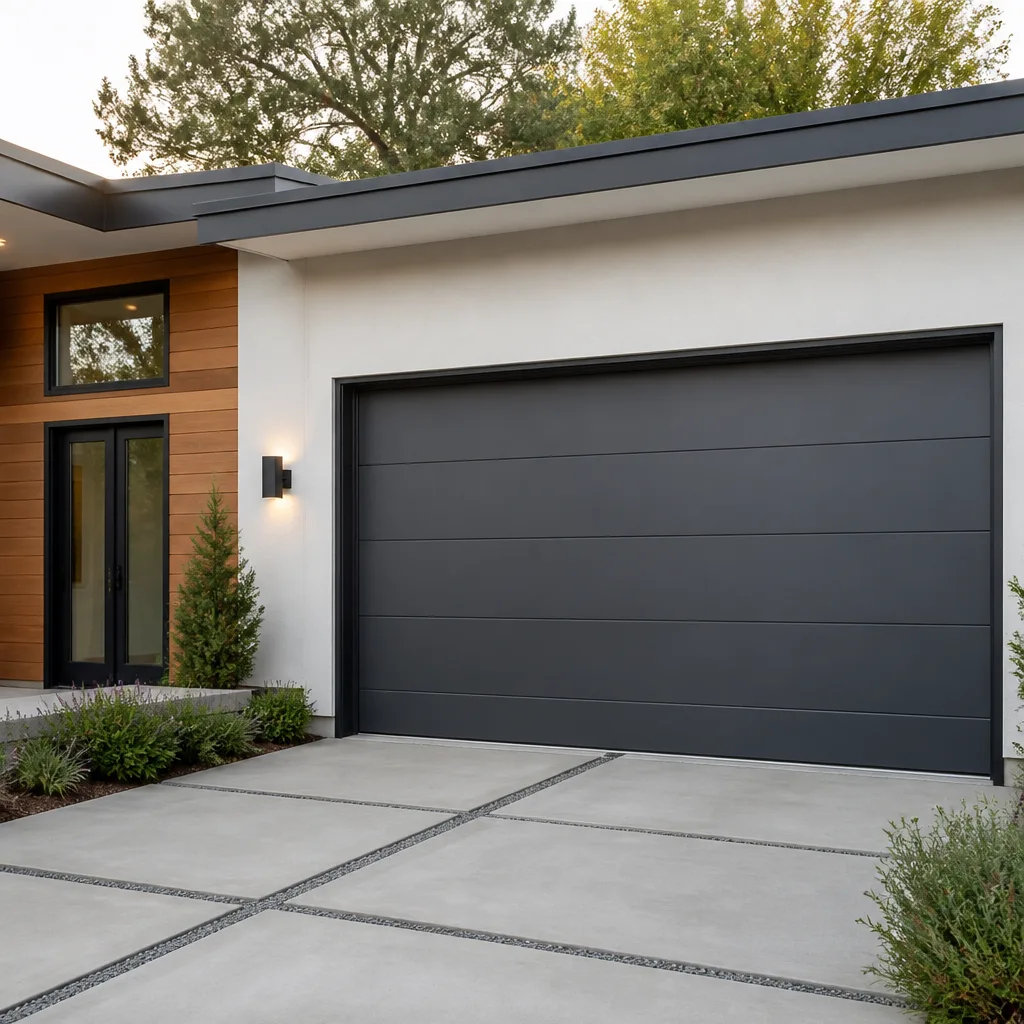 Modern flush
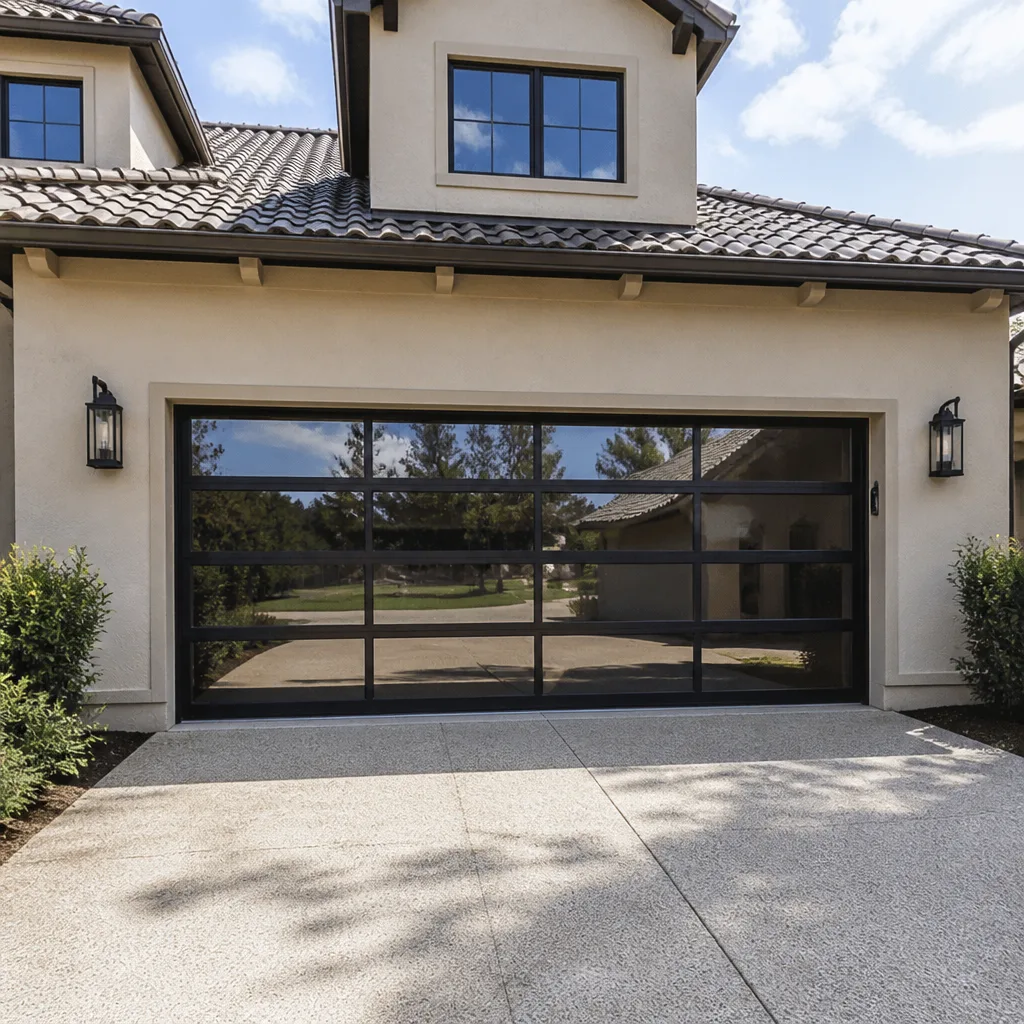 Full-view glass
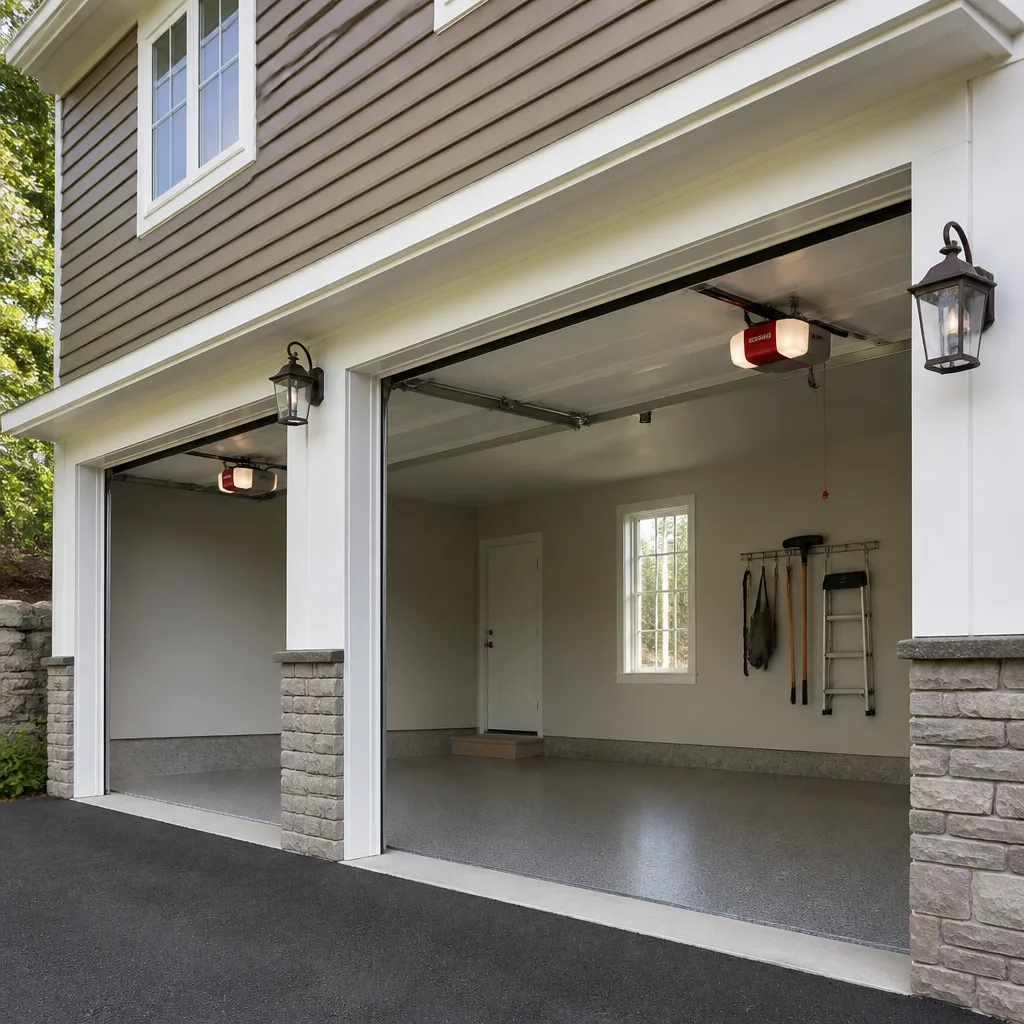 LiftMaster openers
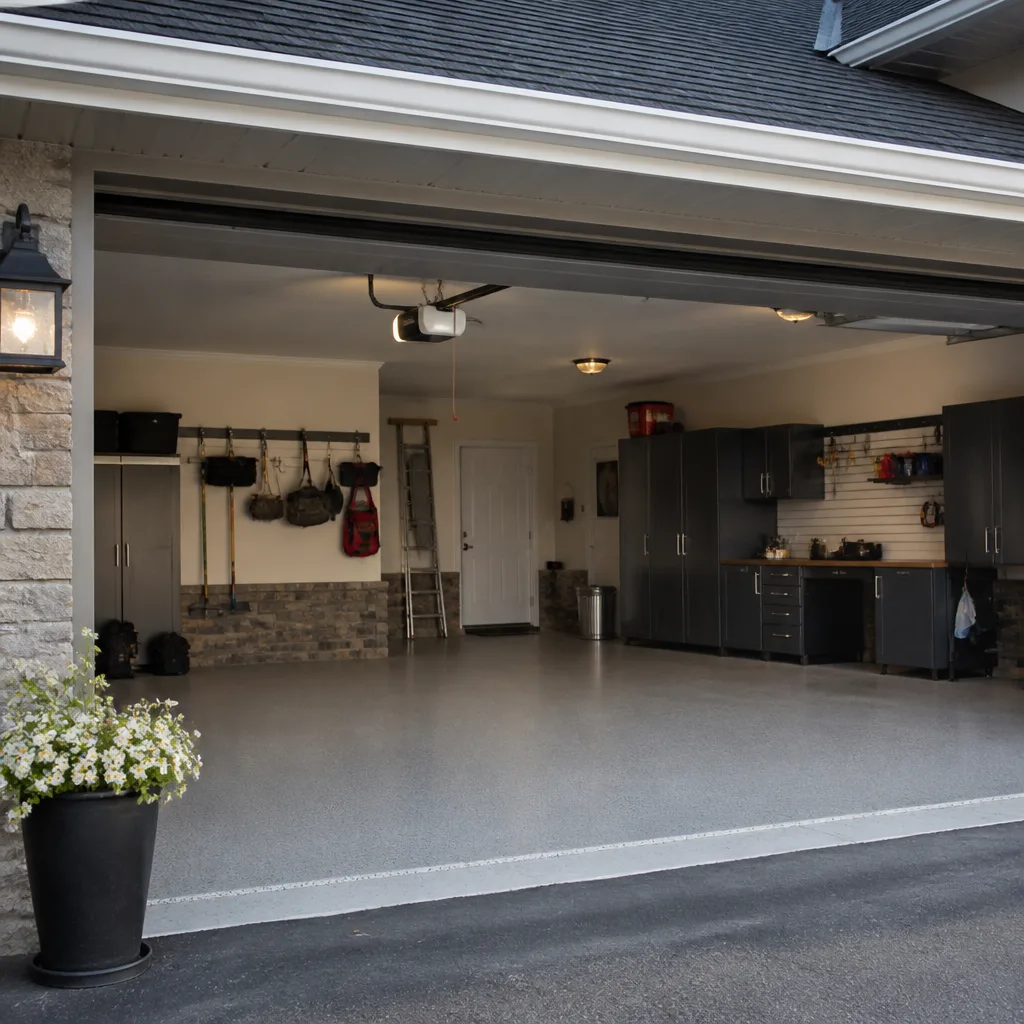 Chamberlain openers
Full 25-point door and opener safety check with every visit - springs, cables, rollers, tracks, and your LiftMaster or Chamberlain opener included
You get a price before we start. It does not change when the pro arrives.
Get your free estimateThe Complete Guide to Garage Doors in Quincy
Most garage door guides are written for a suburban ranch in Ohio. Quincy homeowners are dealing with 100-year-old framing, tight driveways, and coastal air that eats hardware – none of which shows up in the standard advice. The result is a lot of Quincy homeowners buying doors that don’t fit their openings, or hiring crews who show up expecting a straightforward swap and find something else entirely. This guide maps every major decision to the conditions you actually face in Quincy: rough opening sizes in older triple-deckers and carriage houses, headroom clearance in post-war ranches, and the material choices that hold up near Wollaston Beach and Marina Bay.
Styles & brands we work with
- Raised-panel steel
- Carriage house
- Modern flush
- Full-view glass
- LiftMaster openers
- Chamberlain openers
Quick Answer
The right garage door for a Quincy home depends on three things: the age and construction of your garage’s rough opening, the headroom above the door, and how exposed the hardware is to coastal air. A specialist assesses all three before recommending anything. Sectional doors are the standard solution for most Quincy configurations, but narrow openings in older neighborhoods often call for custom sizing or a roll-up, and premium door brands like Raynor and Clopay give you material options that generic installation won’t mention.
Table of Contents
- How Quincy’s Housing Stock Shapes Your Garage Door Choices
- Rough Openings, Headroom, and What Fits
- Coastal Proximity and Material Choices Near Wollaston Beach and Marina Bay
- Sectional, Carriage, Roll-Up: Which Door Types Fit Quincy Garages
- What a Salesperson Offers vs. What a Specialist Specs
- Choosing an Opener for a Quincy Home
- Sequencing the Full Project: Assessment to First-Year Maintenance
- Common Mistakes to Avoid
- When to Call a Professional
- Frequently Asked Questions
- The Bottom Line
How Quincy’s Housing Stock Shapes Your Garage Door Choices
Quincy’s housing stock is one of the most varied in the region, and that variety is the single biggest reason generic buying advice fails here. A garage door that fits perfectly in one neighborhood can be impossible in another three streets over. Walking through the city, you pass three distinct construction eras before you’ve crossed a single ZIP code.
Triple-deckers dominate the denser residential blocks. Their garages, where they exist, tend to be tight – often a single-car footprint with a narrow rough opening framed in original wood. Older detached garages from the colonial era sit on narrower lots, often with shallow setbacks from the driveway. And post-war ranches in the outer neighborhoods tend to have wider bays but lower headroom. Each era presents a different constraint.
What this means for you:
- Triple-deckers: narrow openings may require custom-width doors or a roll-up to maximize clearance.
- Colonial-era detached garages: original framing can be out of square, meaning a stock door won’t sit flush without adjustment.
- Post-war ranches: low headroom limits sectional door options and often dictates a low-clearance track or a roll-up.
- Newer infill construction: more standardized, but often uses builder-grade hardware that wears faster than the door itself.
Our technicians have up to 15 years of experience across the region, and the recurring theme in Quincy is that no two garages are alike. That’s why we assess before we recommend. Whether your door needs a garage door repair or a full replacement, the measurement comes first. Get that wrong and nothing else works.
Rough Openings, Headroom, and What Fits
Before you think about style or color, you need three measurements: the rough opening width and height, the headroom above the opening, and the side clearance. These three numbers determine which doors are even possible. In older Quincy garages, they often reveal constraints that a showroom visit would never catch.
Here’s the sequence a specialist runs through:
- Measure the rough opening in three places – left, center, right – because older framing is rarely perfectly square.
- Check the headroom. Sectional doors need space above the opening for the door to tilt back and travel along the tracks. If you have a low ceiling, a low-clearance track or a roll-up becomes necessary.
- Check side clearance for the vertical tracks and springs. Narrow tuck-under garages in dense Quincy blocks often have less side room than standard installations assume.
- Confirm the ceiling structure where the opener and tracks will attach. Older garage ceilings may need reinforcement before mounting.
- Inspect the floor threshold for level. A sloped or crumbling apron affects the bottom seal and water intrusion.
If your garage was built before the mid-20th century, expect the measurements to tell a different story than the door you had in mind. That’s normal in Quincy. A custom-sized sectional from Clopay or Amarr covers most of these cases without forcing a compromise on style. The key is that the specialist measures, then specs – not the other way around.
Coastal Proximity and Material Choices Near Wollaston Beach and Marina Bay
If your home sits near Wollaston Beach or Marina Bay, the air your garage door lives in is harder on hardware than most of the inland city. Coastal air accelerates corrosion on springs, hinges, rollers, and track hardware. It also affects the finish on steel doors, where moisture and salt gradually pit and discolor surfaces over time.
The fix isn’t complicated, but it does require thinking past the standard offering. In our experience, most installers push whatever door is easiest to source, without asking where the house sits relative to the coast. That works fine in the middle of the city; near the water, it doesn’t.
What to spec for a coastal Quincy property:
- Galvanized or coated hardware instead of bare steel hinges and rollers.
- Hot-dipped galvanized springs where available – these last longer than standard oil-tempered springs in damp air.
- Powder-coated or prefinished steel doors rather than primed-only surfaces that need repainting sooner.
- Wood-look composite or aluminum carriage doors rather than genuine wood, which needs more upkeep in coastal conditions.
We’ve seen hardware on coastal Quincy doors fail years before similar hardware inland, and the difference almost always comes down to material choice at installation rather than any failure of the door itself. That means the material decision at purchase time is worth more than any repair decision after the fact. If your hardware is already showing corrosion, garage door opener repair and hardware replacement are usually straightforward once the right parts are sourced. The Quincy neighborhood you’re in matters here – a door spec’d for inland Wollaston is not the same door spec’d for the water side of the boulevard.
Sectional, Carriage, Roll-Up: Which Door Types Fit Quincy Garages
Three door types cover almost every Quincy garage, and each fits a different set of conditions. Choosing the wrong one for your garage forces compromises on clearance, style, or both.
Sectional doors
The standard choice for most Quincy properties. Panels stack behind the opening and travel along overhead tracks. They suit garages with adequate headroom and a straight, square opening. Modern sectional doors come in insulated and non-insulated versions; if your garage is attached to the house (common in the post-war neighborhoods), an insulated door helps regulate temperature in the room above or beside it. Clopay and Amarr both make sectional options across price tiers, from builder-grade to premium.
Carriage doors
These swing out or slide to the side and mimic the look of old carriage-house doors. They suit colonial-era detached garages where the architecture calls for a period-appropriate look. They need clear driveway space in front or beside the opening to swing or slide – a constraint in dense Quincy blocks with tight driveways. When they fit, they’re the strongest visual match for the older parts of the city.
Roll-up doors
A roll-up coils the door into a compact bundle above the opening, requiring less headroom than a sectional. They’re the right answer for post-war ranches with low ceilings, and often for tuck-under garages where the ceiling is close to the door header. They come in fewer style options, but the trade-off in clearance is usually worth it when headroom is genuinely tight.
Our technicians handle all three door types and the openers behind them, so the recommendation you get isn’t limited by what one manufacturer will sell. Whether your Quincy garage is a tight triple-decker bay or a wide ranch opening, the door choice starts with the constraints, not the catalog.
What a Salesperson Offers vs. What a Specialist Specs
A salesperson sells what’s on the showroom floor. A specialist specs what actually fits your garage. The gap between those two things is the most common reason we get called to correct a job someone else quoted.
In practice, the difference shows up in a few specific places:
- Measurement rigor. A salesperson takes a single width and height. A specialist measures at three points, checks square, and inspects the ceiling structure.
- Clearance understanding. A salesperson assumes standard headroom. A specialist knows the difference a low-clearance track or roll-up makes in a post-war Quincy ranch.
- Brand fluency. A salesperson pushes one line. A specialist specs across brands – Raynor and Clopay for premium and mid-tier, LiftMaster and Chamberlain for openers – depending on what the job requires.
- Coastal awareness. A salesperson doesn’t ask where the house sits relative to the water. A specialist specs hardware and finish accordingly.
- Continuity. A salesperson hands off to a subcontractor whose name you may never know. A specialist follows the job through installation and any adjustments.
We’re a garage door specialist, not a handyman shop that adds doors to a menu of other trades. Every technician’s training is concentrated on one system, which means the diagnostic depth is different. Quincy homeowners get a spec that fits their garage rather than one that fits a sales sheet.
Choosing an Opener for a Quincy Home
The opener is the part of the system most Quincy homeowners underestimate. A good door with a struggling opener performs like a bad door. And because openers have evolved quickly, the choice now depends on how you want to interact with the door as much as on raw lifting capacity.
Four opener brands cover the overwhelming majority of residential installs: LiftMaster, Chamberlain, Genie, and Craftsman. If you’re replacing an existing opener, matching the brand to the door’s weight and travel is the first step. If you’re upgrading, smart-home connectivity is where the market has moved.
Key considerations for a Quincy opener decision:
- Lift capacity. Match the opener to the door’s weight, including insulation and any glass panels. An opener rated for a light door will strain under a heavy insulated one.
- Noise level. Belt-drive openers run quieter than chain-drive. If your garage shares a wall with a bedroom or a neighbor’s unit, belt-drive is usually worth the difference.
- Smart connectivity. LiftMaster and Chamberlain both offer MyQ-enabled systems, while Genie offers Aladdin Connect. If you want to check the door from your phone, these matter.
- Battery backup. Worth having if your neighborhood loses power often – and compatible with most modern residential openers.
- Safety sensors. Required on all current opener installs for a reason. The reversing mechanism and photo-eye sensors keep the door from closing on people or pets.
We know these four brands well because they’re the systems you’re most likely to already own. When we troubleshoot an opener that isn’t behaving, the diagnostic path differs by brand and generation, and that familiarity shortens the job. Whether your Quincy home runs a legacy chain-drive Craftsman or a newer LiftMaster with MyQ, we start from what you have rather than what we’d prefer to install.
Sequencing the Full Project: Assessment to First-Year Maintenance
Whether your door needs a repair or a full replacement, the sequence matters. Rushing any step causes problems later – wrong door, wrong opener, or a hardware choice that fails in the first coastal season. Here’s the sequence we recommend for a Quincy garage door project, from first inspection through the first year.
Step 1: Assessment
A specialist measures the rough opening, headroom, and side clearance, inspects the ceiling structure, checks the floor threshold, and evaluates the existing hardware. This is the step that determines what’s actually possible. It should happen before any conversation about style or brand.
Step 2: Permit check
Many cities require a permit for a garage door replacement, particularly where structural work is involved or where the door’s footprint changes. Quincy’s building department will confirm what applies to your project. Ask before ordering, not after.
Step 3: Selection
With measurements in hand, select the door type, material, and opener. This is where brand fluency matters. A specialist can spec across Raynor, Clopay, Amarr, and Wayne Dalton, and across LiftMaster, Chamberlain, Genie, and Craftsman, rather than pushing one line.
Step 4: Installation
Installation sets the tracks level, mounts the opener correctly, aligns the springs, and tests the door’s balance and safety reversing. A door that looks right but isn’t balanced will strain the opener and fail prematurely. We test the balance and the safety sensors before we call the job done.
Step 5: First-year maintenance
A new door isn’t maintenance-free. In the first year, lubricate the hinges, rollers, and springs; check the balance once per season; and inspect the hardware for any early corrosion, particularly on coastal Quincy properties. If the door is wood or has wood-look components, check the finish in the first few months and touch up any spots.
Springs and cables are under high tension and aren’t a maintenance item for homeowners to handle. Leave those to a trained professional even when the task looks simple. A trained technician handles them safely with the right tools; a homeowner should never attempt it.
Common Mistakes to Avoid
- Buying a stock door for an out-of-square opening. Older Quincy garages rarely have perfectly square framing, and a stock door will sit crooked and strain the tracks. Measure in three places before ordering anything.
- Ignoring headroom before choosing a sectional door. Post-war ranches and tuck-under garages might not clear a standard sectional. If headroom is tight, plan for a low-clearance track or a roll-up from the start.
- Skipping the permit check. Quincy’s building department will tell you whether your project needs a permit. Getting that answer before you order saves a headache later.
- Letting a salesperson spec the door without a site measure. Showroom advice is fine as a starting point, but a spec without measurement is a guess. Insist on the measure first.
- Using standard hardware near Wollaston Beach or Marina Bay. Coastal air eats bare steel. Spec galvanized or coated hardware from the start to save a replacement in two or three years.
- Choosing the opener last. The opener has to match the door’s weight and travel. Picking it after installation forces compromises or a second purchase.
- Trying to adjust springs or cables yourself. These components are under high tension, and the risk of serious injury is real. Call a trained professional instead.
When to Call a Professional
Some issues are safe to inspect yourself; others aren’t. Call a professional if your door won’t open or close fully, if the opener runs but the door doesn’t move, if you hear a loud snap from above the door (a sign of a broken spring), if the door hangs crooked, or if the safety reversing sensors won’t align. Corroded hardware near Wollaston Beach or Marina Bay is also worth a professional look, because the repair usually runs deeper than the visible part. Springs, cables, and anything under high tension should never be handled by a homeowner; call for a professional, and call for a free estimate before doing anything else. Quincy Garage Door Service offers free estimates in Quincy – call (844) 755-5234. We answer 24/7. Fast dispatch from 7am to 7pm, Sunday through Friday. Whether your door needs a repair or a full replacement, we’ll quote the price before any work starts and honor the written estimate.
Frequently Asked Questions
You’ll know once you measure three things: rough opening width and height, headroom above the opening, and side clearance. Most Quincy garages can fit a sectional door if headroom is at least the track height the door requires, but post-war ranches and tuck-under garages often do not. A specialist measure confirms it before you order. Call (844) 755-5234 for a free estimate and measure.
Yes. Coastal air accelerates corrosion on springs, hinges, rollers, and track hardware, and it can pit the finish on standard steel doors over time. The fix is material choice at installation – galvanized or coated hardware, powder-coated or prefinished steel, and composite or aluminum where wood-look is wanted. It’s a spec decision, not a repair decision. Call (844) 755-5234 for an exact quote.
We work with LiftMaster, Chamberlain, Genie, and Craftsman – the four brands that cover the overwhelming majority of residential installs in Quincy. That includes legacy systems and modern smart-home-connected models like MyQ and Aladdin Connect. If your opener isn’t behaving, the diagnostic path depends on the brand and generation, and that familiarity shortens the job. Call (844) 755-5234 for an exact quote.
Yes, on repair jobs when time allows. We answer 24/7 and run fast dispatch from 7am to 7pm, Sunday through Friday. A call outside dispatch hours is booked into the next opening. Full replacements are measured, ordered, and scheduled, so those aren’t same-day work. Call (844) 755-5234 for an exact quote.
No. We quote the price and agree it with you before any work starts, then the written estimate sets the final price. If we find something the initial assessment missed, we tell you before proceeding rather than adding it to the invoice afterward. Estimates are free. Call (844) 755-5234 to schedule yours.
Yes. Our technicians are state-licensed, insured and bonded, and they’ve got up to 15 years of experience. Every job is a garage door job at Quincy Garage Door Service, which is why the diagnostic depth is different from a multi-trade operator. Call (844) 755-5234 for an exact quote and to ask about credentials.
The Bottom Line
Quincy’s housing stock doesn’t fit generic garage door advice. Measure the rough opening, headroom, and side clearance before anything else. Choose materials that hold up near Wollaston Beach and Marina Bay. Match the opener to the door’s weight and travel, and lean toward brands like LiftMaster or Chamberlain if you want smart-home features. Sequence the project correctly – assessment, permit check, selection, install, first-year maintenance – and don’t skip the permit step. And treat springs and cables as professional-only territory. If you’d rather have a specialist run the measure and spec than guess at the showroom, call (844) 755-5234 for a free estimate. Whether your door needs a repair or a full replacement, Quincy Garage Door Service is here to help you get it working right the first time.
Written by the team at Quincy Garage Door Service.
See the difference
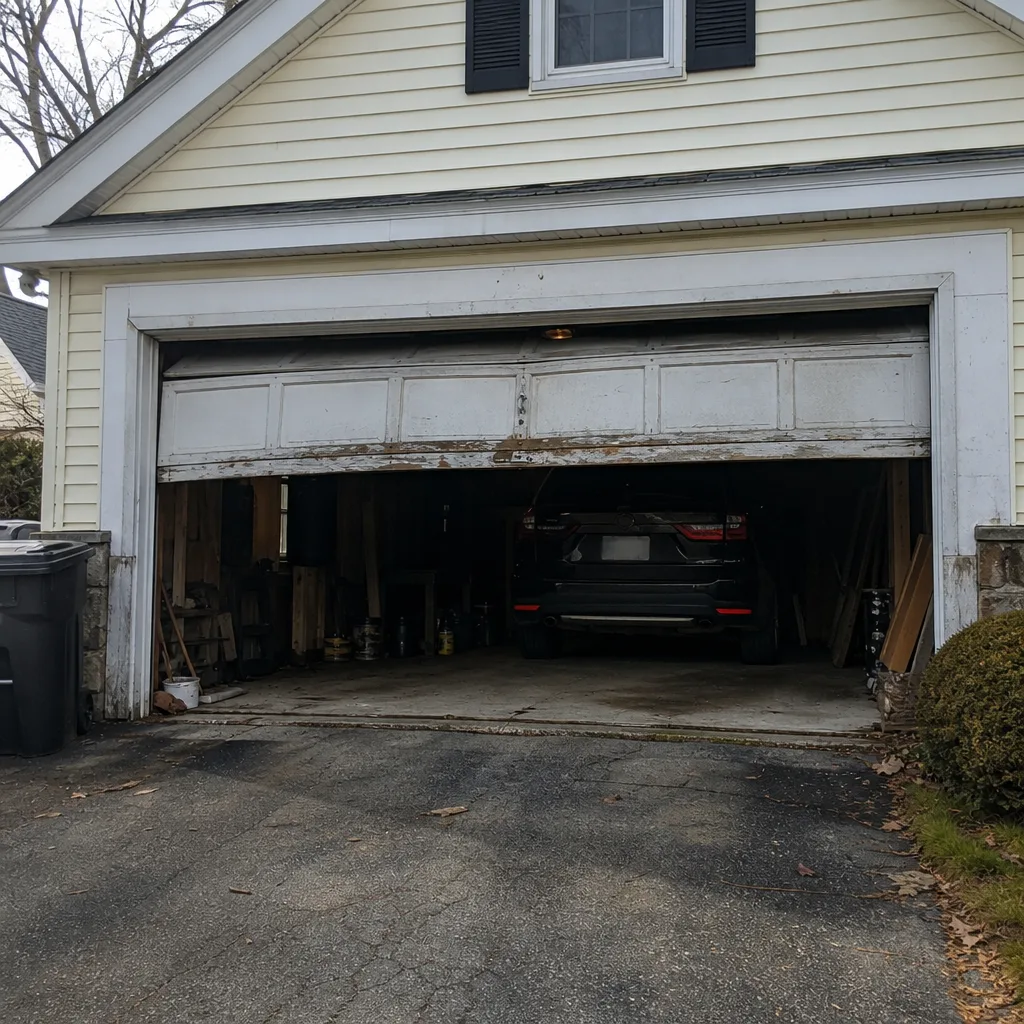 Before
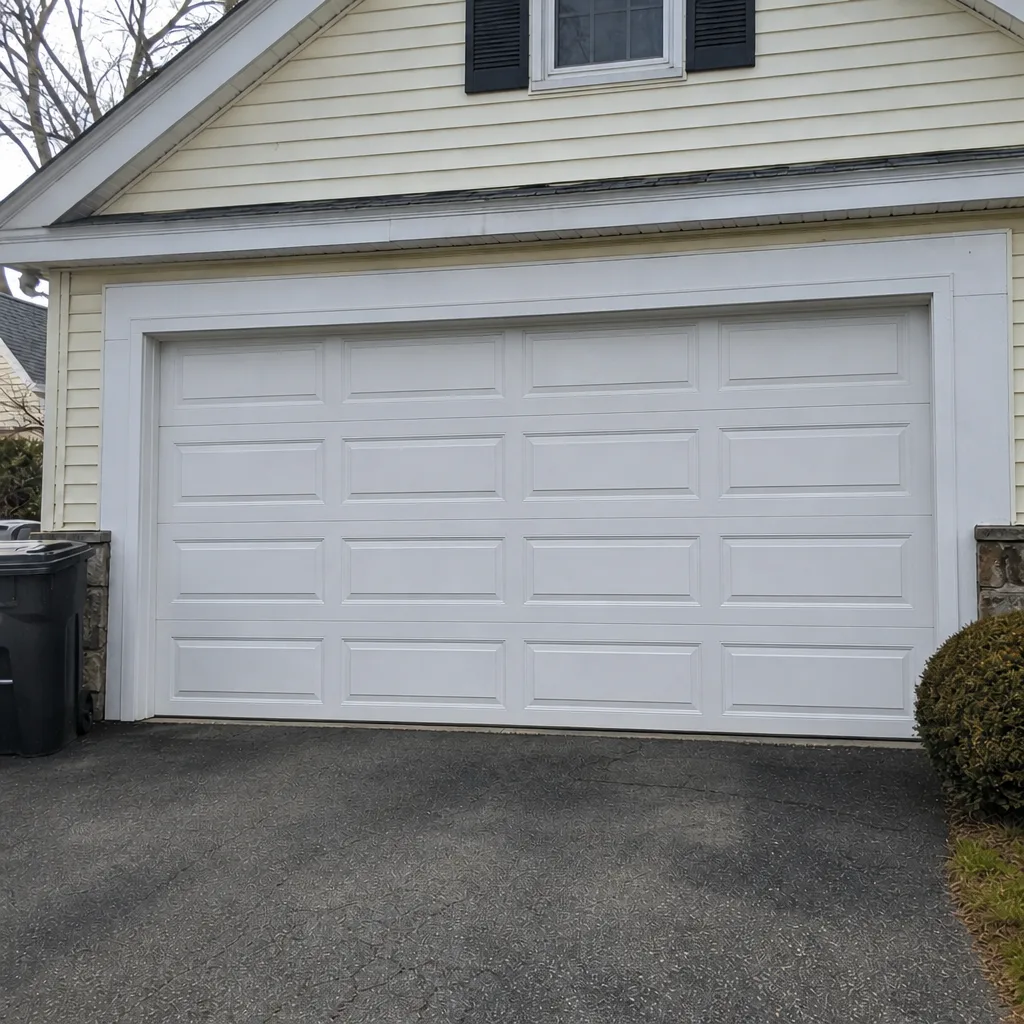 After
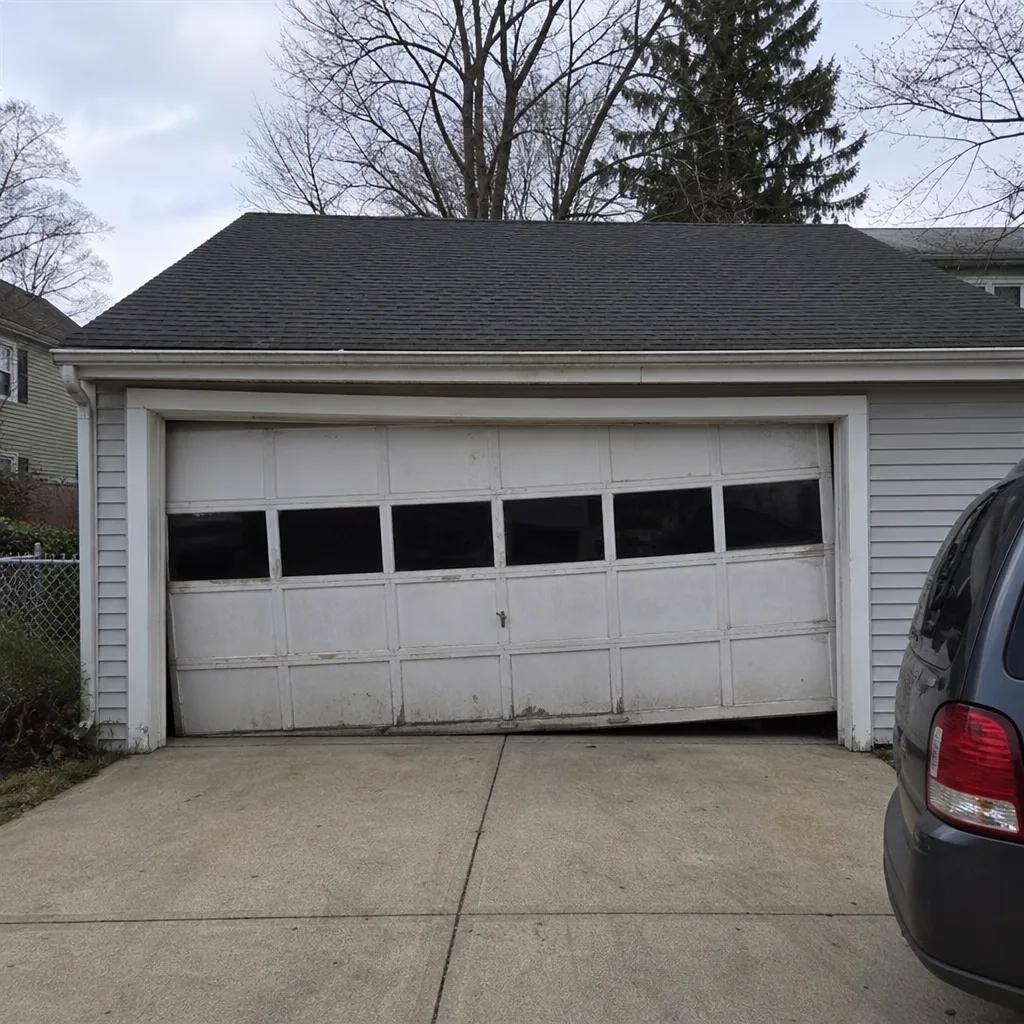 Before
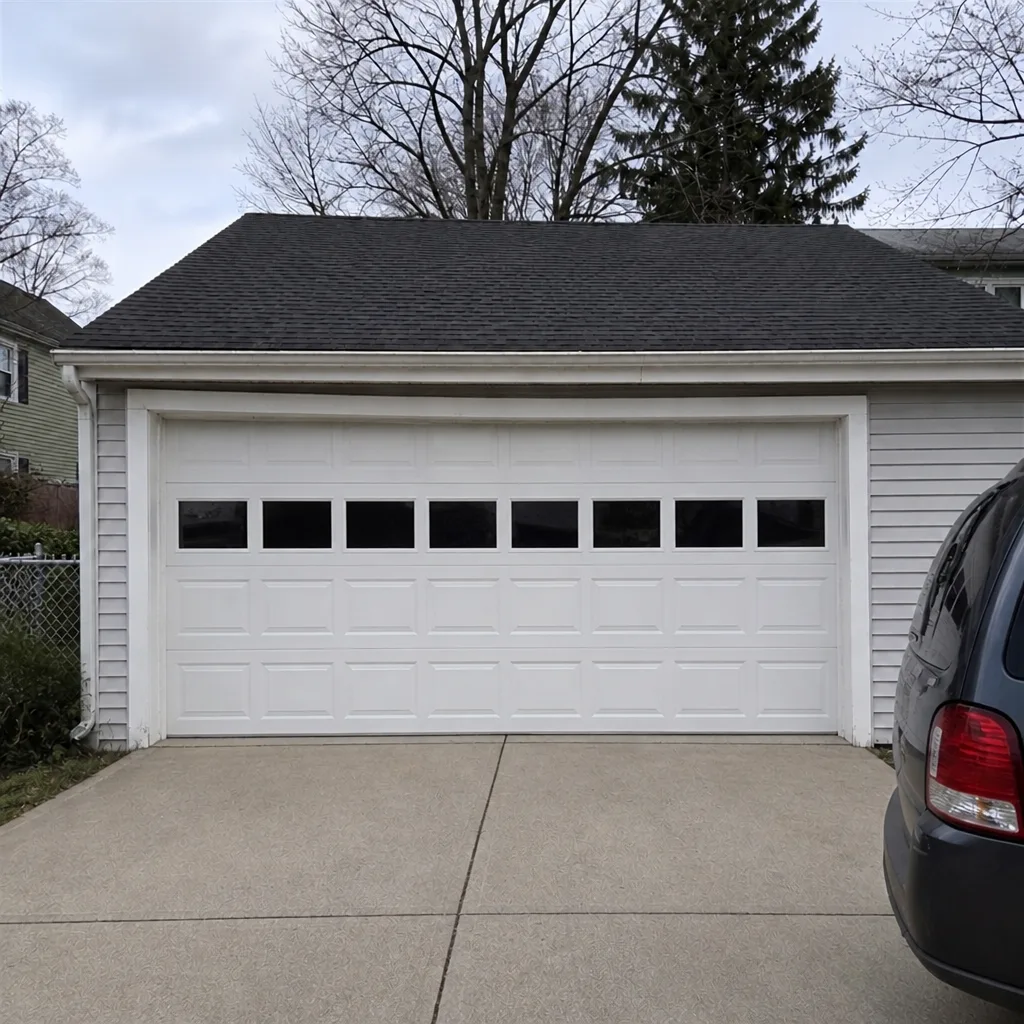 After
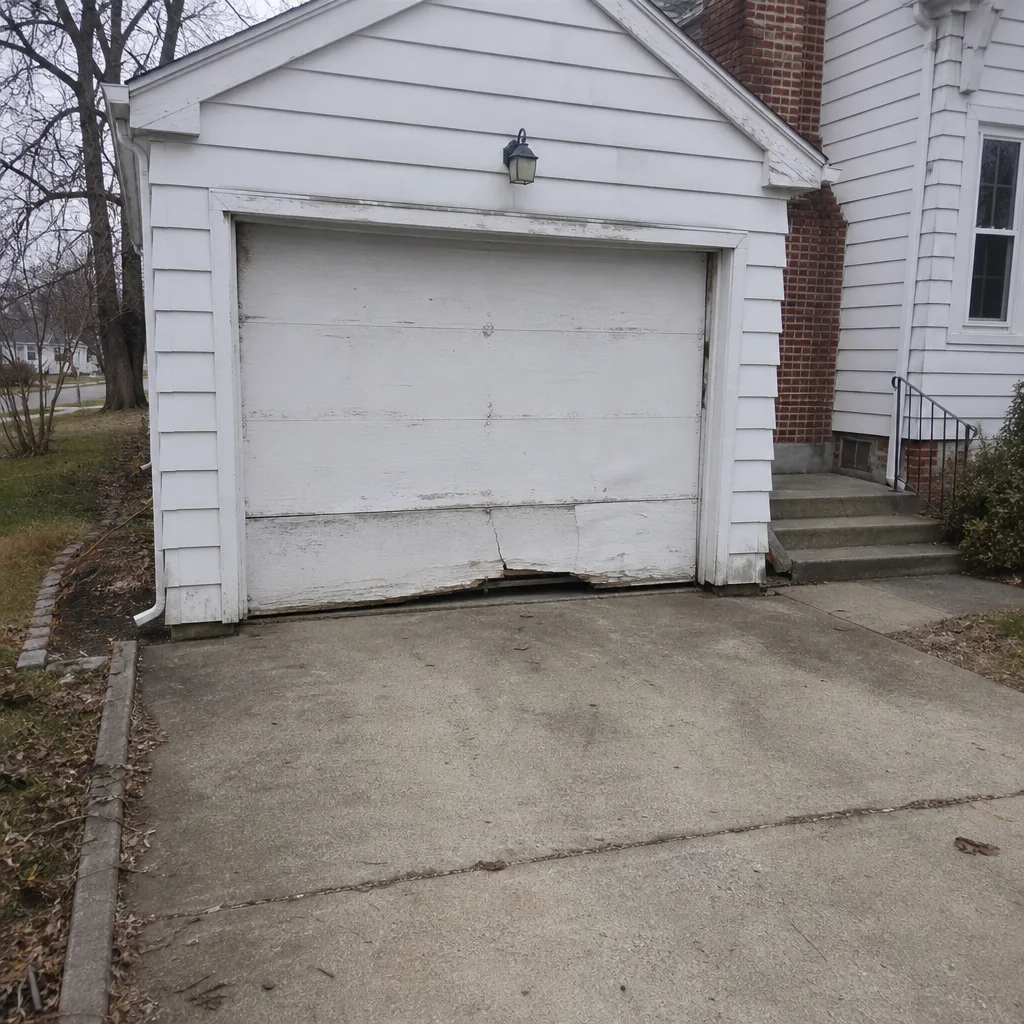 Before
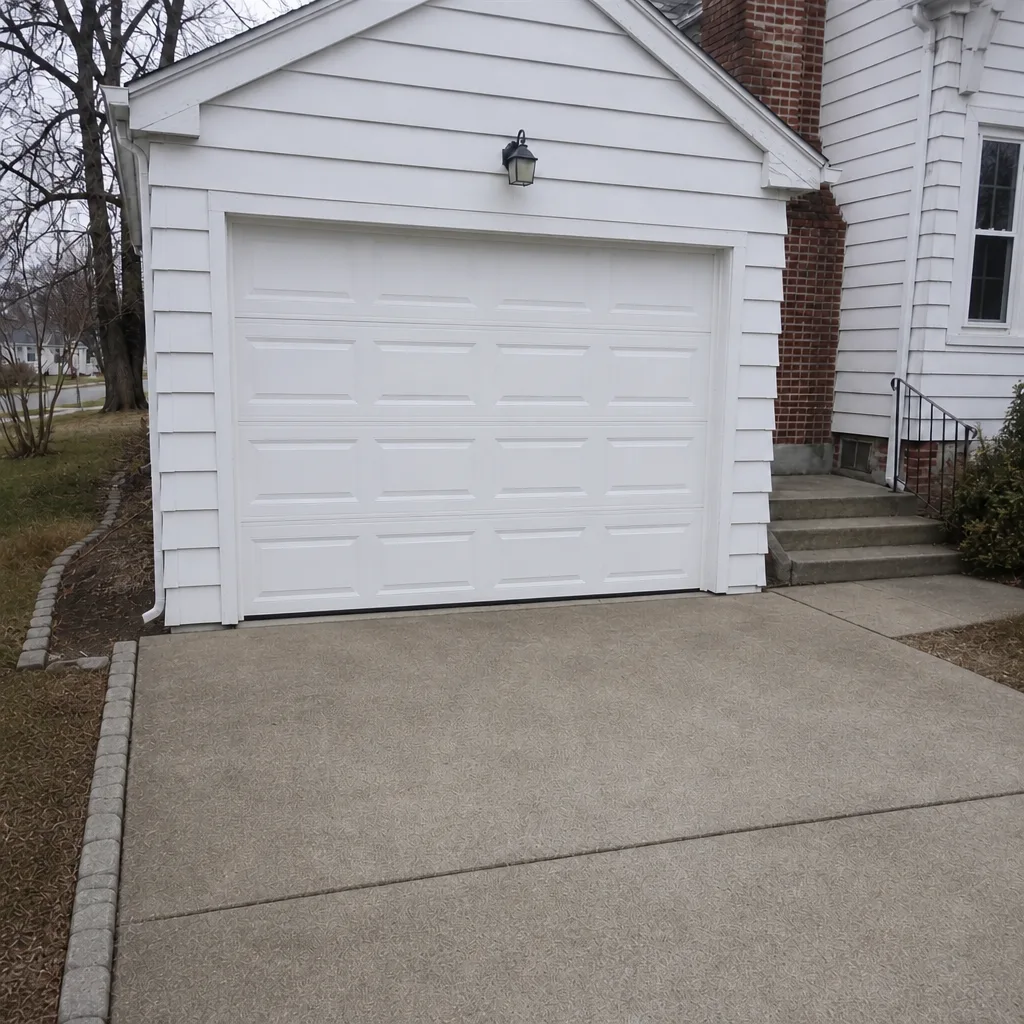 After