
Last updated November 16, 2026
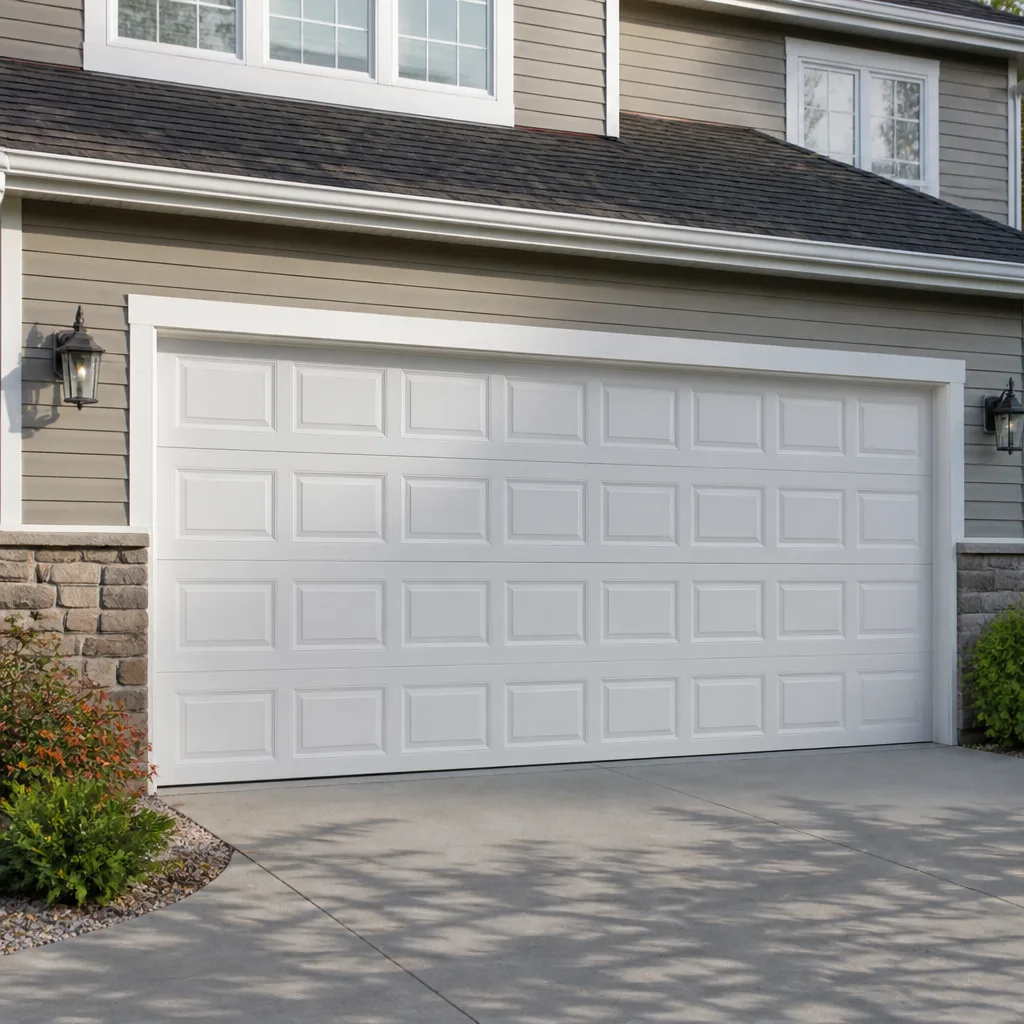 Raised-panel steel
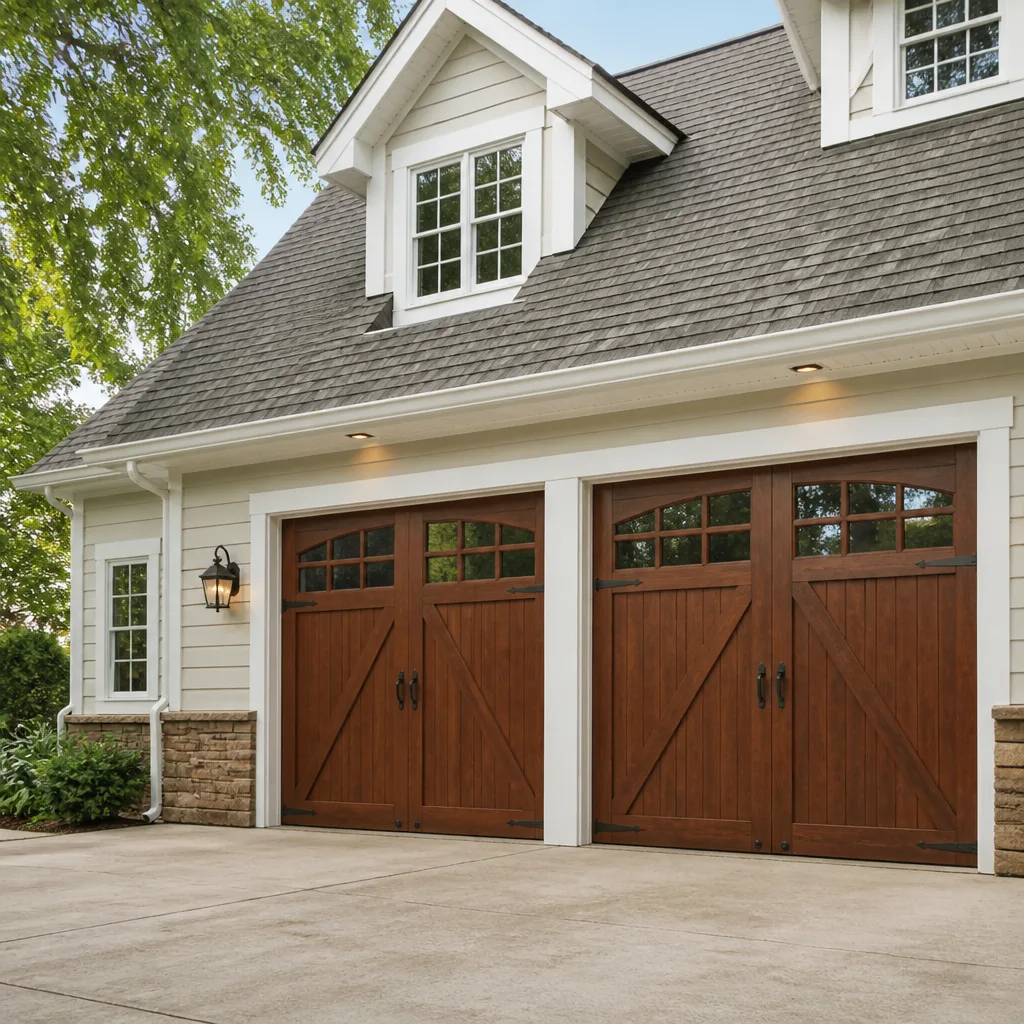 Carriage house
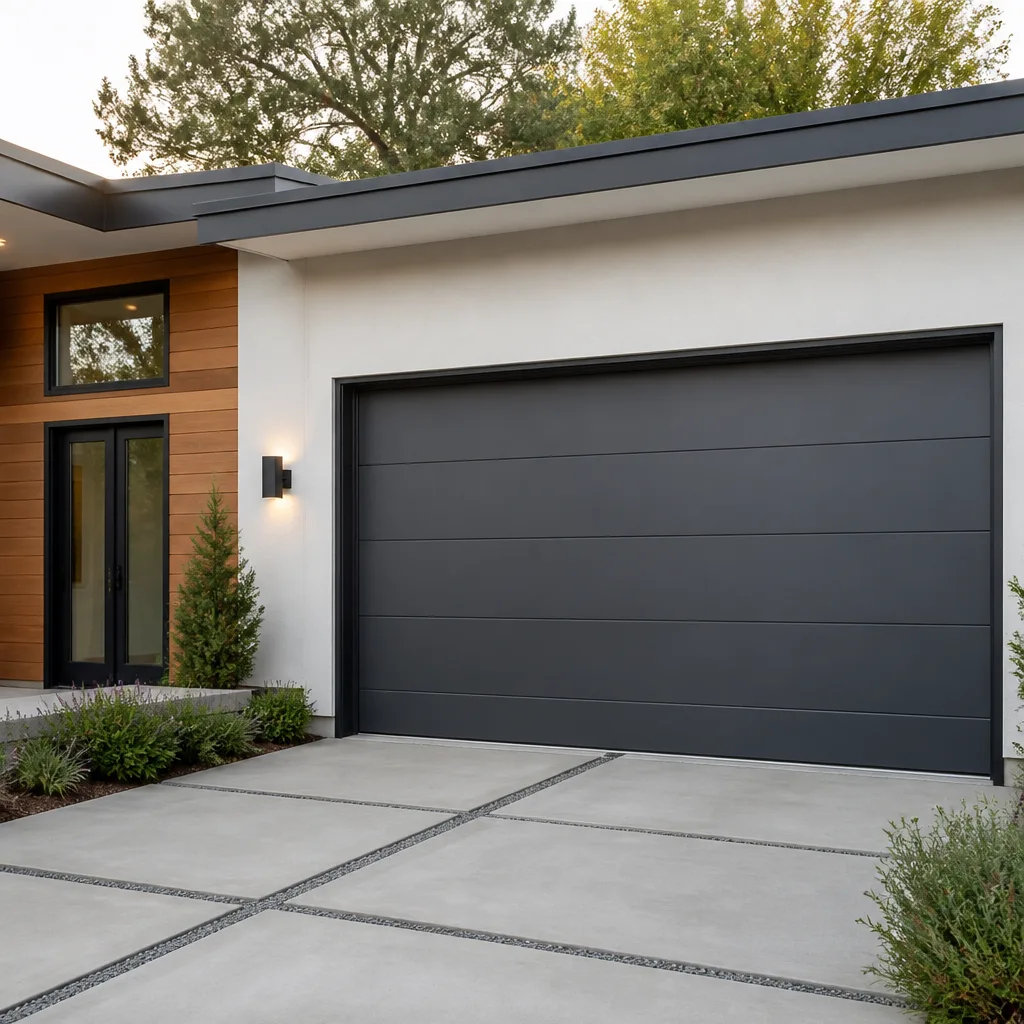 Modern flush
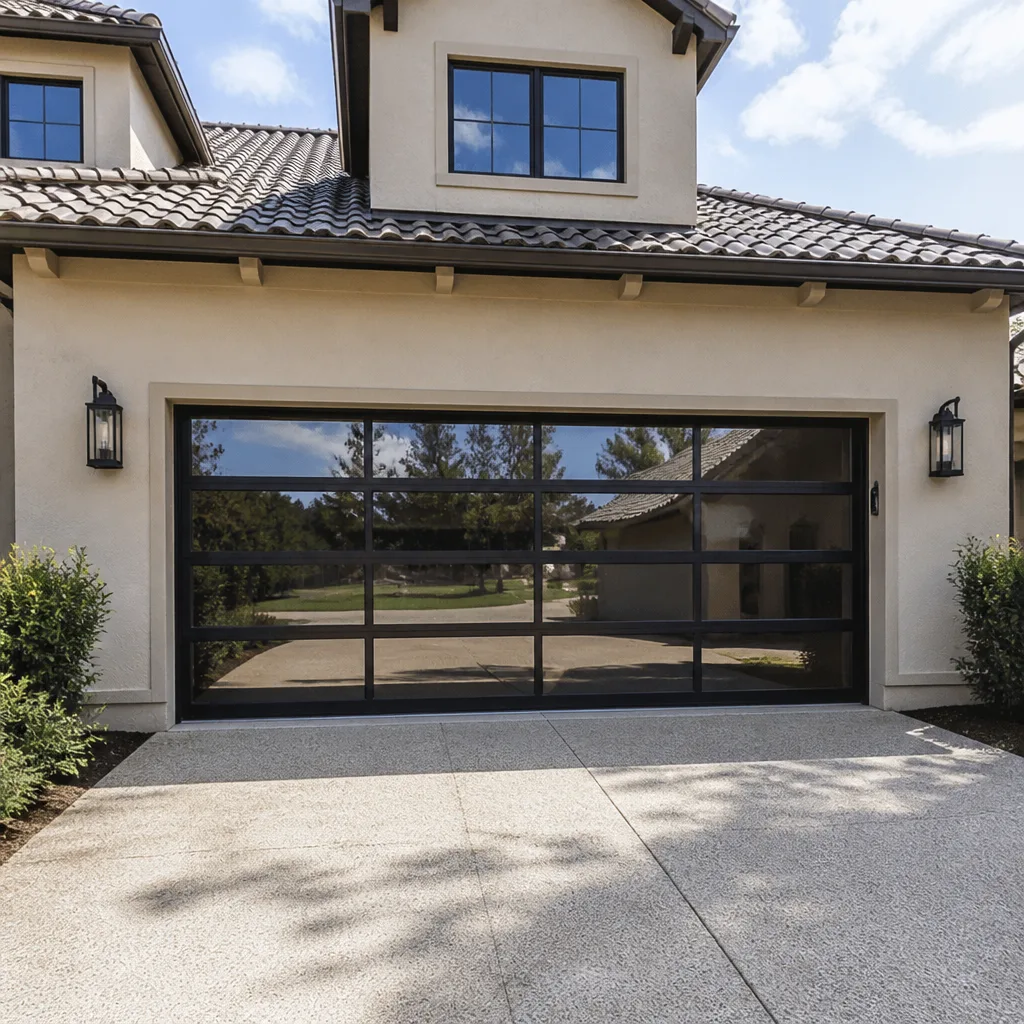 Full-view glass
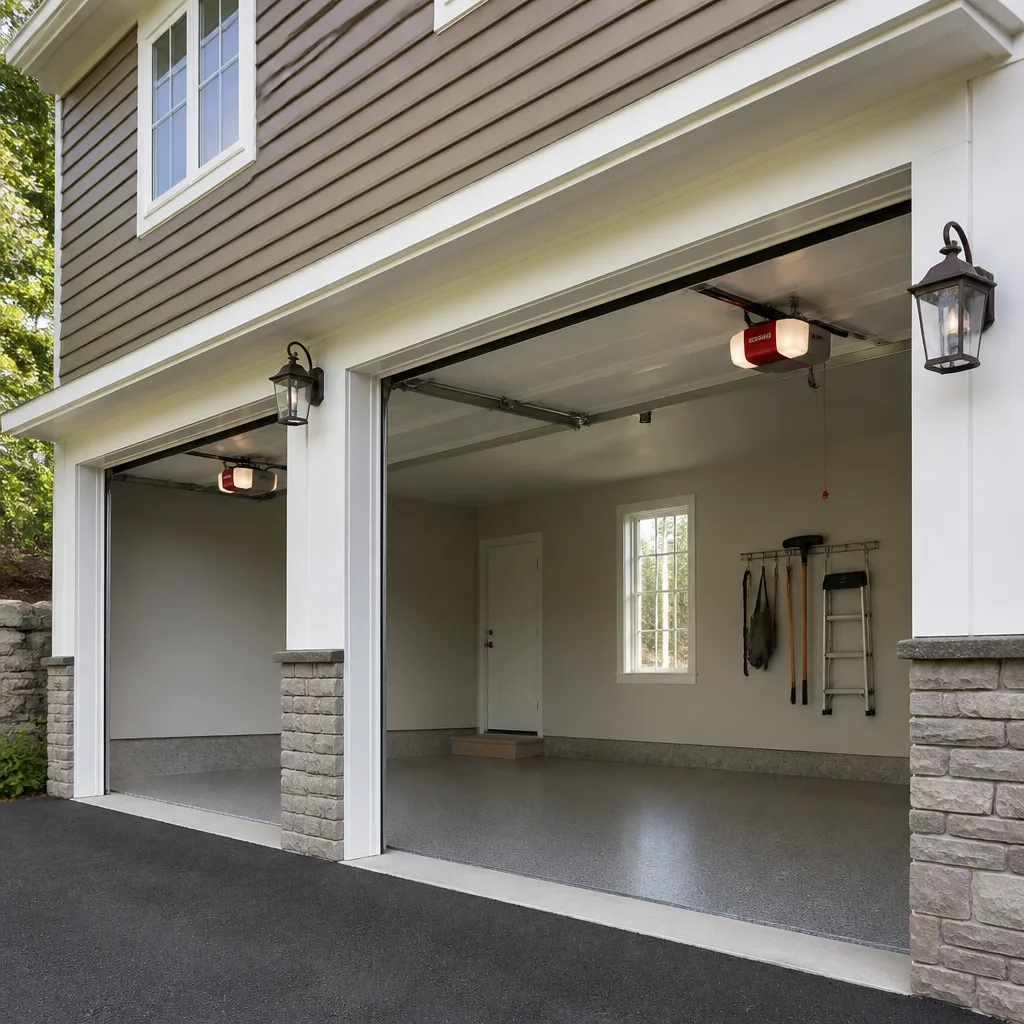 LiftMaster openers
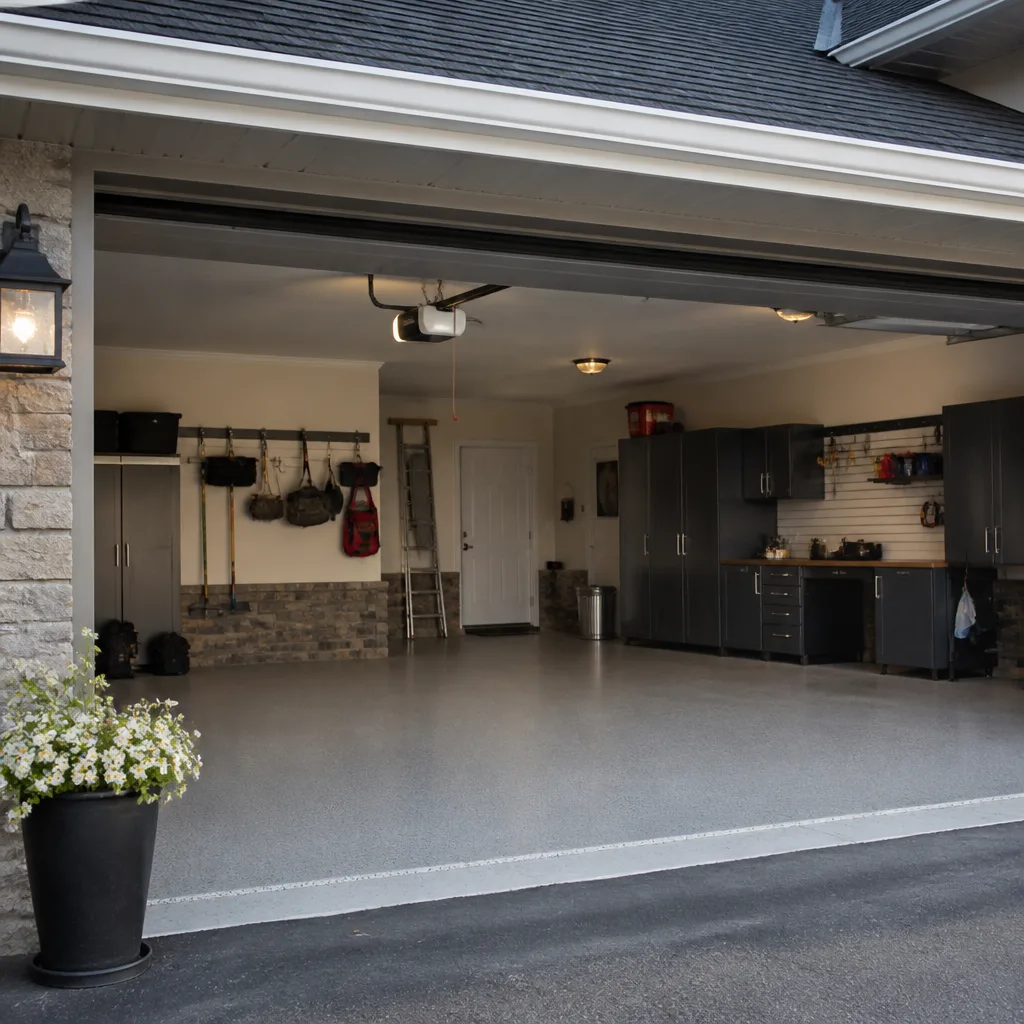 Chamberlain openers
Full 25-point door and opener safety check with every visit - springs, cables, rollers, tracks, and your LiftMaster or Chamberlain opener included
You get a price before we start. It does not change when the pro arrives.
Get your free estimateDIY vs Professional Garage Door: The Quincy Homeowner’s Decision Guide
Torsion springs are under 150 to 300 pounds of torque. That’s not a scare tactic, it’s physics, and it’s the reason the DIY conversation has to start there before it goes anywhere else. Most homeowners frame the decision around cost: can I save money doing this myself? The better frame is risk stratification. A handful of garage door maintenance tasks are genuinely low-risk for a careful homeowner with a Sunday afternoon. A few of them have put people in the emergency room. This guide draws that line precisely, task by task, so you can make the call based on actual stakes rather than YouTube confidence. Along the way we’ll cover what Quincy’s older housing stock does to install difficulty, what DIY does to manufacturer warranties, and the cost math most homeowners get wrong.
Quick Answer
Lubrication, bottom seal replacement, sensor alignment, and visual inspection are reasonable DIY tasks for a competent homeowner. Spring replacement, cable replacement, and track realignment are not, because the stored energy in a torsion or extension spring and the tension in a lift cable can release in less than a second, and Track work involves hardware under load that can shift without warning. For anything involving springs, cables, or the structural alignment of the door, call a trained professional. For routine maintenance and small parts, do it yourself and save the service call.
Styles & brands we work with
- Raised-panel steel
- Carriage house
- Modern flush
- Full-view glass
- LiftMaster openers
- Chamberlain openers
Table of Contents
- Why risk stratification beats a cost-based decision
- Tasks that are genuinely DIY-appropriate
- Tasks that are not: the mechanical reason why
- How Quincy’s older garages change the calculus
- What DIY does to your openers and door panel warranties
- The real cost comparison, including hidden DIY costs
- When hiring a professional is actually cheaper
- How to decide in five minutes
Why risk stratification beats a cost-based decision
Garage doors are the largest moving object in most homes, and they’re held in a static balance against their own weight by one or two springs. That balancing force is the entire safety concept of the machine. When the system is properly tensioned, lifting the door takes perhaps five to ten pounds of force. When it’s not, the door can weigh over 200 pounds at the handle, and the spring can store enough energy to break bones if it fails during work. That’s the whole reason this isn’t really a cost question.
Think of the tasks on a spectrum. At the low end are things where the worst-case outcome is a stripped screw or a call to a professional anyway. In the middle are jobs that take more knowledge than brute strength but don’t involve stored energy, like replacing a bottom seal. At the high end are jobs involving torsion springs, extension springs, lift cables, and the structural alignment of the track. Those are where the actual stakes live, and where any honest risk assessment has to separate garage doors from other home maintenance.
Here in Quincy, we see this play out in a particular way. Homeowners who are comfortable with woodworking, plumbing, and light electrical work assume the garage door is in the same category. It isn’t. The failures are faster, the energy is stored, and the consequence of a mistake is measured in hospital visits, not just a ruined weekend. We’re not trying to talk anyone out of DIY. We want to draw the line in the right place so the weekend projects stay safe and the spring work goes to someone trained to do it.
Tasks that are genuinely DIY-appropriate
These tasks don’t require disconnecting the door from the opener, don’t involve the springs or cables, and don’t put you in the path of stored energy. A competent homeowner with basic tools and an hour to spare can handle all of them.
- Lubrication. A thin coat of garage door lubricant on hinges, rollers, the torsion bar bearings, and the opener rail quiets a door and slows wear. Avoid spraying lubricant on the track itself; it collects dust and gums up the rollers.
- Bottom seal replacement. A cracked or missing bottom seal lets water, cold air, and small pests in. With the door partially closed and the opener disconnected (on the door side only), a homeowner can usually slide a new seal into the aluminum retainer or replace the whole assembly. Measure the width first; seals are sold in standard sizes and the wrong width leaves gaps.
- Safety sensor alignment. The two small photo-eye sensors at the bottom of the door should face each other and both should be lit. If one is dark or the door reverses for no reason, check for obstruction, wipe the lenses, and align them so the LED stays solid.
- Visual inspection. Every few months, look at the springs, cables, and rollers. Rust streaks, fraying cables, or a spring with a visible gap means stop and call. That inspection takes five minutes and catches problems before they become a broken door.
- Weatherstripping on the sides and top. Side and top seals are tacked on with nails or staples and can be replaced with standard weatherstripping from any hardware store.
- Remote and keypad programming. Reprogramming a remote or re-keying a keypad is safe and quick, and the manual for your specific opener will walk you through it. If the opener is a LiftMaster or Chamberlain with MyQ, the app does the same job.
If you’re in Quincy and you’ve done everything on this list and the door still doesn’t feel right, that’s the point to call rather than to escalate. There’s a difference between a door that needs a lube and adjustment and a door that needs repair, and the second one isn’t a weekend project.
Tasks that are not: the mechanical reason why
These are the jobs where the argument for professional service isn’t about money or convenience. It’s about the physics of stored energy and the fact that a mistake here can cause serious injury in less time than a human can react. We won’t give step-by-step instructions for these; that’s not an oversight. It’s the right call.
Torsion spring replacement
A torsion spring is wound to hundreds of pounds of counterbalance force. When a technician winds one, they use two steel winding bars and stand out of the release path on purpose. A homeowner using the wrong tool, or holding it in the wrong position, can have the spring unwind in a fraction of a second. The winding cone can rotate the bar with enough force to break a wrist. There is a reason the trade treats this as one of the highest-risk parts of residential work. Call a trained professional.
Extension spring replacement
Extension springs stretch along the sides of the door and store the same kind of energy in tension. If they break during work, the recoil can damage the door and the surrounding structure, and the ends can whip with enough force to injure. The tension has to be released in a specific sequence before removal, and the safety cable that runs through the spring’s center (a code requirement in most modern installs) has to be in place. Doing this in the wrong order is the classic home-injury scenario in this trade.
Lift cable replacement
The lift cables run from the bottom corners of the door up to the drums on the torsion bar. They’re under the full counterbalance tension of the door at all times. A cable that’s been cut or has slipped off the drum will recoil with tremendous force. Even a properly trained technician wears eye protection for this job. The cables also have to be wound on the drums symmetrically, or the door will come up crooked and can jam under load.
Track realignment
The tracks hold the door under load, and they’re bolted to framing that has usually been in place a long time. When the track is off-plumb or bent, the door binds, and forcing it further damages the panels. Re-aligning track means relieving tension first, then re-anchoring to the framing. It’s not a job that responds to a rubber mallet.
Panel and section replacement on a loaded door
Replacing a mid-door panel requires supporting the rest of the door, which means the spring has to be relieved first. Removing a panel from a door that’s still under tension lets the remaining sections shift, and the door can come down hard. If a panel is bent from an impact, this is professional work.
We’d rather lose a job to a homeowner who decides to handle it themselves than have a homeowner try a spring winding and get hurt. That’s not a sales line. It’s the way any trained technician thinks about these three components. If your spring has snapped or your door is hanging on one cable, call (844) 755-5234 and let us get it into a safe state.
How Quincy’s older garages change the calculus
A house built in 1940 has a different garage than a house built in 2015. That’s generally true everywhere, but Quincy has a particularly wide mix of structures, from early-twentieth-century carriage-house-style garages to postwar capes to newer construction in the same neighborhoods. The garage can look fine from the street and still be a more involved job than the videos suggest.
Here’s what we see in the older structures around the city and what it means for DIY work:
- Unlevel concrete floors. A sloping or cracked slab means the door’s bottom seal doesn’t sit evenly. If you replace the seal yourself, measure the whole width, not just one spot. A gap at one end is common and it’s the reason cold air and water still get in after a good DIY seal job.
- Deteriorated framing around the opening. The jambs and header on a garage from the 1940s have been exposed to New England weather for decades, and some have rot behind the trim. Track brackets anchor into that wood. If the framing is soft, re-hanging a track that’s popped loose won’t hold, and that’s a situation where a homeowner can get the door back into a semblance of working and have it fail again a week later.
- Undersized headers. Some older garages have a header sized for the original door, not for a modern replacement with a heavier panel. If you’re putting in a new door, the opening has to be measured with that in mind. A door that’s heavier than the framing was built for sags at the center over time, and the weight load can crack the header. This is one of the reasons a proper measure during a replacement quote is done in person, not over the phone.
- Non-standard opening sizes. Plenty of Quincy garages don’t sit at the standard 8×7 or 9×7. A door ordered to the wrong size means shims, gaps, or a return. Measure twice, order once.
- Original wiring in the garage. If you’re replacing an opener, the outlet and the wiring to the safety sensors have to actually meet current needs. Old garage wiring is sometimes on a shared circuit with outdoor lighting, and the load of a new opener can trip a breaker. Have an electrician look at it before you install anything that draws new power.
None of these make DIY impossible. They make the job longer, and they make the case for getting a professional opinion before committing to a project the framing can’t support. A free measure and a written estimate are the right first step for anything bigger than maintenance.
What DIY does to your openers and door panel warranties
Most manufacturers of residential garage doors and openers write their warranties around professional installation. That’s not a technicality. It’s the assumption that the machinery has been installed to the load the manufacturer designed for, with the fasteners specified, and that the safety reverse has been set correctly. When a homeowner installs the product themselves, the warranty on those components can be voided or sharply limited.
The details vary by brand and by component, so read the paperwork on the exact model you own before you touch it. In general, here’s what you’re risking:
- Door panels: Manufacturers like Clopay write their finish and structural warranties on the assumption of professional installation with correct track spacing and fastener choice. A panel that’s been dropped during a DIY install or run out of square because the track is off isn’t going to be covered for the sag or the surface damage.
- Openers: LiftMaster and Chamberlain write their motor and control-board warranties expecting the unit to be installed with the correct rail length and correct force-limit setting. A homeowner who guesses at rail length and then runs the door for a month with the force limit set too high can damage the motor and the control board, and the warranty claim is a hard sell.
- Smart features: If your opener has MyQ or another app-connected feature, the warranty on the module can be affected by how the opener itself was installed. Again, check the paperwork for the specific model.
- Service after the fact: If a licensed technician arrives at a door that was installed by someone else and only then discovers the fasteners are undersized or the track isn’t square, the repair bill goes up. That’s not a warranty issue, it’s just the cost of undoing an installation problem.
If you’re weighing installation of a new opener or a new door, the warranty alone often tips the decision toward professional work. It’s not that the manufacturer is being difficult; it’s that they’re pricing the failure risk on the assumption of a trained install. We install LiftMaster and Chamberlain openers regularly and know what the paperwork expects. That’s one reason we’re asked to handle install up front rather than untangle an install after the fact.
The real cost comparison, including hidden DIY costs
The DIY cost picture is never just the parts. Homeowners routinely underestimate the hidden line items, and those are what makes the comparison between DIY and professional work closer than it looks on the shelf price. Here’s a realistic view of what each side actually costs in the Quincy area, with the numbers below as typical estimates rather than exact figures.
Typical cost ranges (estimates only)
- DIY bottom seal replacement: $25 to $60 for the seal, plus a utility knife, silicone spray, and an afternoon. No special tools.
- DIY safety sensor replacement: $30 to $75 for a sensor pair, plus basic tools. Still simple.
- Professional bottom seal replacement (installed): typically $130 to $250, including the seal.
- Professional torsion spring replacement (one spring): typically $180 to $340. A matched pair is usually replaced together, so a pair costs about twice that. Springs age together, and this is the standard recommendation.
- Professional lift cable replacement: typically quoted as a pair; call for an exact figure, and expect the written estimate before any work starts.
- Professional track realignment: quoted per job, typically $150 to $300 depending on whether the track has to be re-anchored into new framing.
- Full new door installation (standard single, installed): priced by the door and the opening; the written estimate sets the final figure.
Every one of those professional figures is an estimate. The written estimate you receive sets the price, and it’s agreed before any work starts. We’d rather put that in writing at the start than surprise you with a bill.
Hidden DIY costs homeowners underestimate
- Tool rental. Winding bars, a proper set of winding tools, and a good set of clamps can be $40 to $80 to rent, if the rental shop even carries them. Buying them for one job rarely makes sense.
- Disposal. A torsion bar, an old panel, and used hardware need to go somewhere. Disposal fees and a second trip to the transfer station add up.
- A second set of fasteners. The first attempt usually strips at least one bolt or splits a lag. A trip to the hardware store for the right ones is $15 to $40, and another hour of your afternoon.
- The tool you didn’t know you needed. A torque wrench, a specific socket, a grinder for a rusted bolt. Each is small; the sum is not.
- Time. A spring job that a trained technician does in under two hours can take a careful homeowner a full day, plus the return trip when the door still isn’t balanced.
- Repair after a misstep. The one cost that’s genuinely unpredictable, and the one this guide is mostly about.
Add it up and a $180 spring job is often cheaper than the DIY version, before you count the risk. When you’re ready to skip that math, call (844) 755-5234 for a free estimate. Estimates are free, and the estimate isn’t a commitment.
When hiring a professional is actually cheaper
The clearest case for professional service is a door that isn’t working and a homeowner who doesn’t know why. A door that bangs on the way down can be a spring, a cable, a roller, a hinge, or a misaligned sensor. A door that reverses immediately is usually a sensor, but not always. A door that’s stiff at the top but fine at the bottom can be a bad torsion spring, a broken drum, or a track out of plumb.
DIY diagnoses tend to skip the actual diagnosis and go straight to the most visible part. If the door is loud and the spring looks old, the assumption is the spring. If the door is slow and the motor hums, the assumption is the motor. Either assumption can be wrong, and the cheapest outcome for the customer is the one where the right component gets replaced once. Replacing the wrong component is the expensive path. Here’s what makes the difference:
- A full inspection, not just a look at the symptom. A technician checks the balance of the door (with the door disconnected from the opener), the tension on the springs, the condition of the cables and the drums, and the alignment of the tracks. Every one of those can produce the same symptom.
- Diagnosis before replacement. On a LiftMaster or Genie opener, a hum and no movement can mean a stripped gear or a dead capacitor. Replacing an opener when the door itself is binding costs more than the original repair.
- Correct parts first time. A technician who’s worked on Genie and Chamberlain units knows the gear sets and the logic boards that fail, and knows what to bring. The homeowner guessing at a part through an online order, and returning it if it’s wrong, has paid for shipping and lost a week.
- No repeat labor. A misdiagnosed repair gets charged twice. When the first part didn’t fix it, you’re back to the beginning, only now you’ve spent the time and the money.
We’re often asked, “Is this the spring or the opener?” The honest answer is that we don’t know until we test the door with the opener disconnected. Once we do, the answer is clear, and the estimate is in writing. For anything that isn’t a quick visual fix, that diagnosis is the part of the job that’s worth paying for.
See the difference
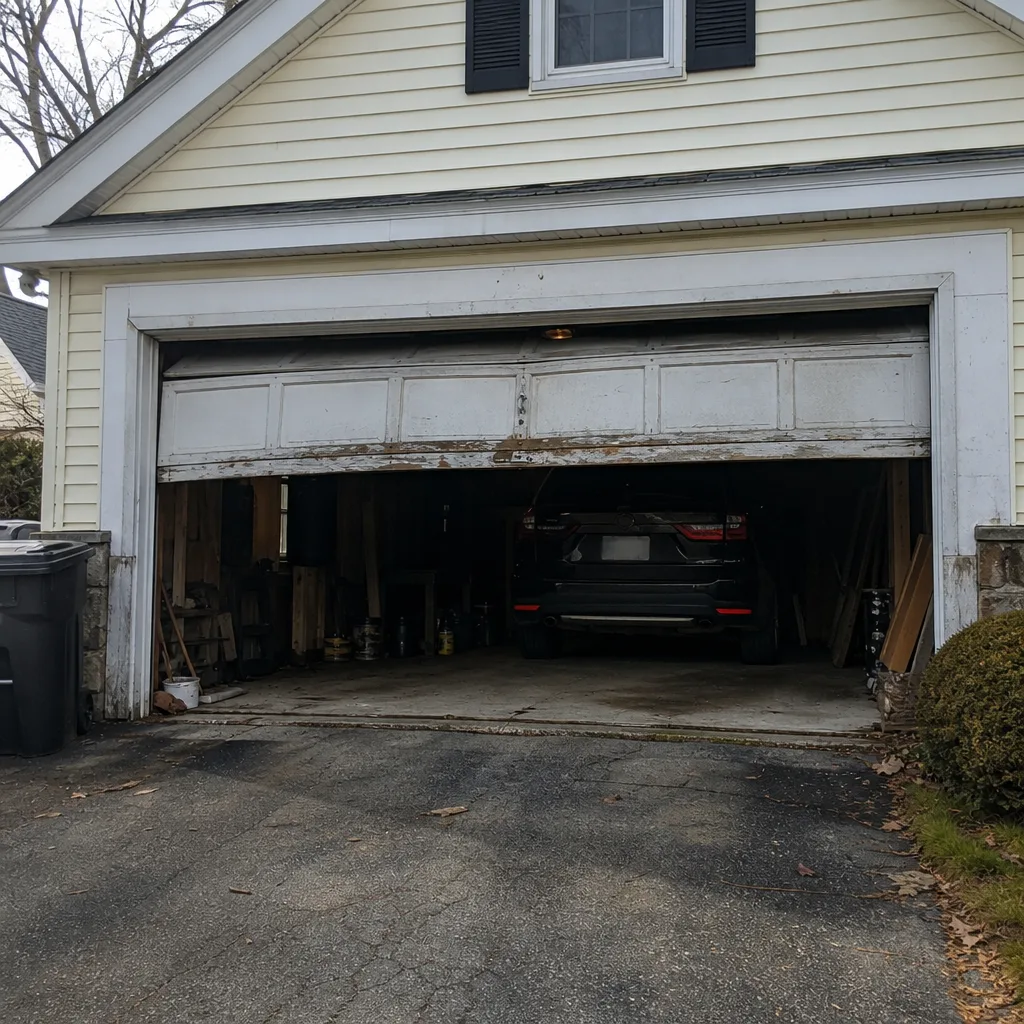 Before
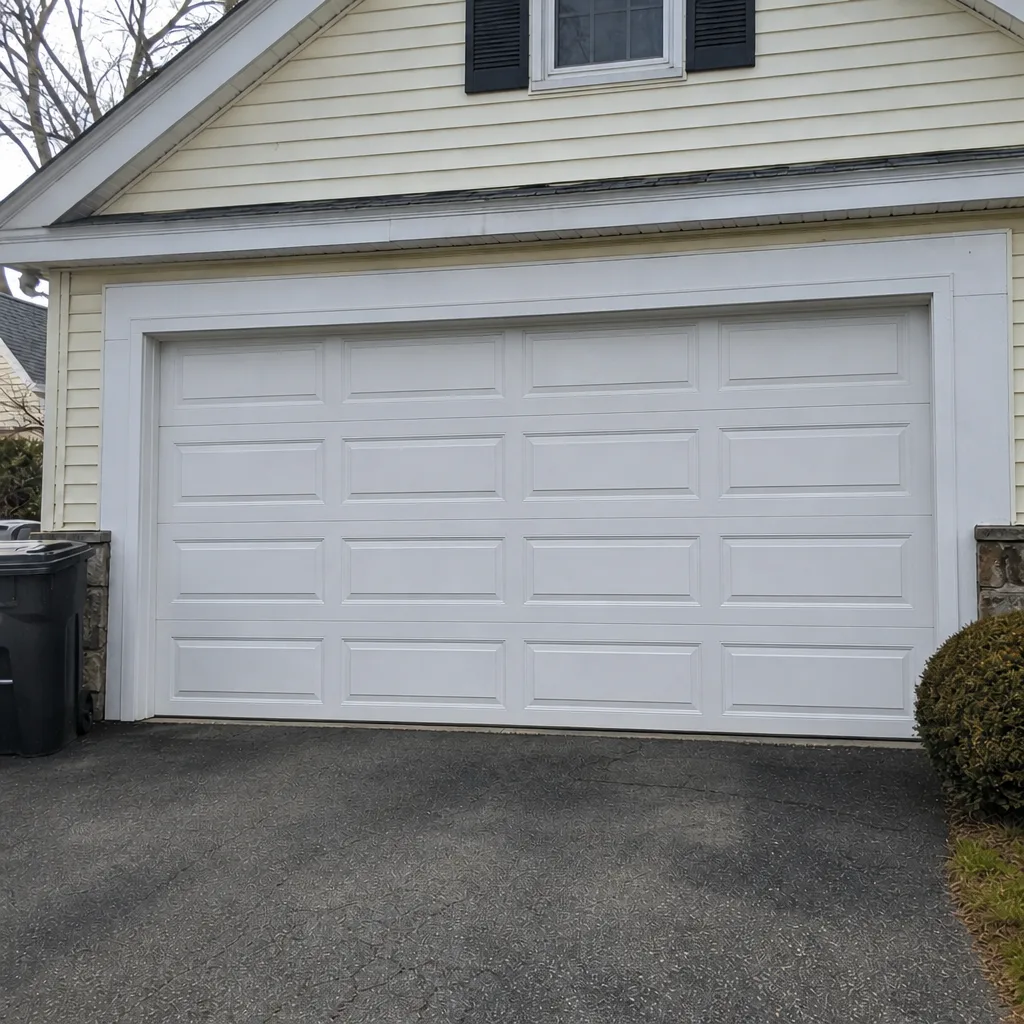 After
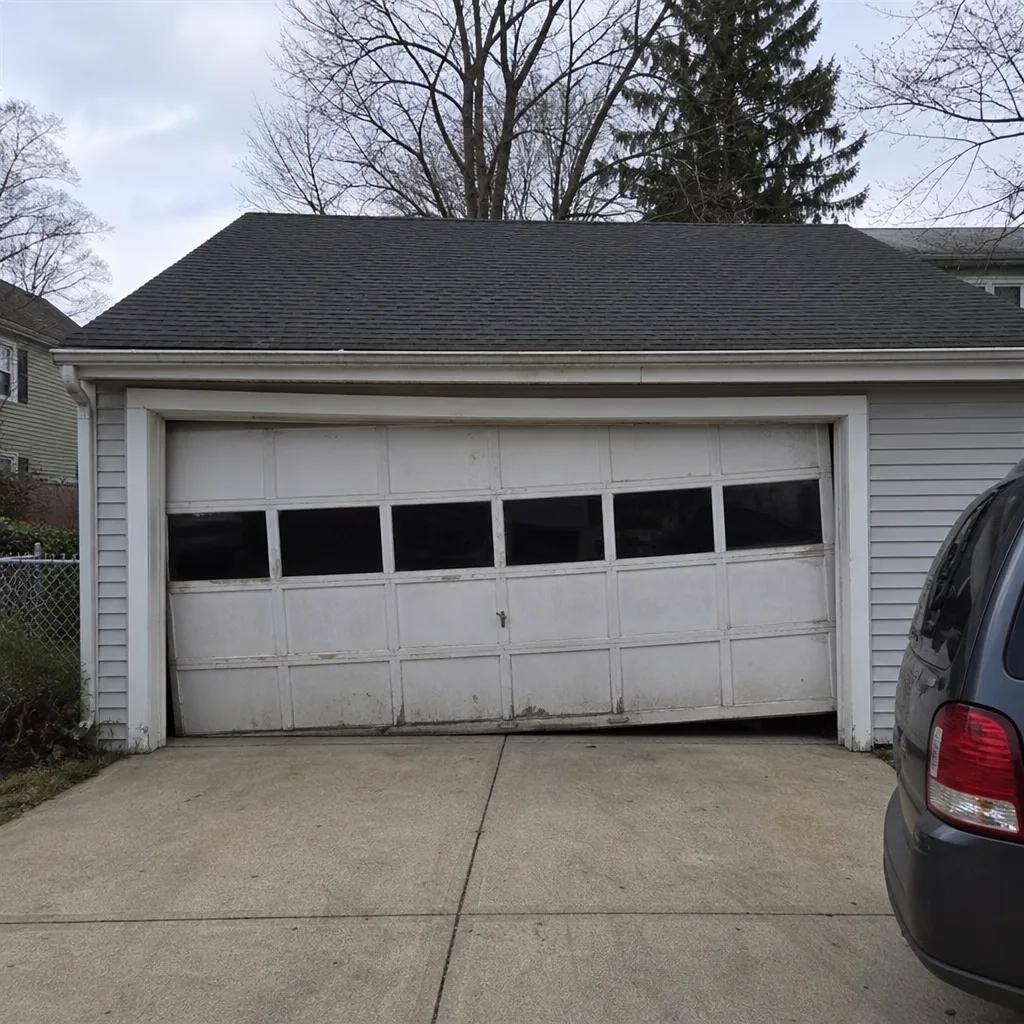 Before
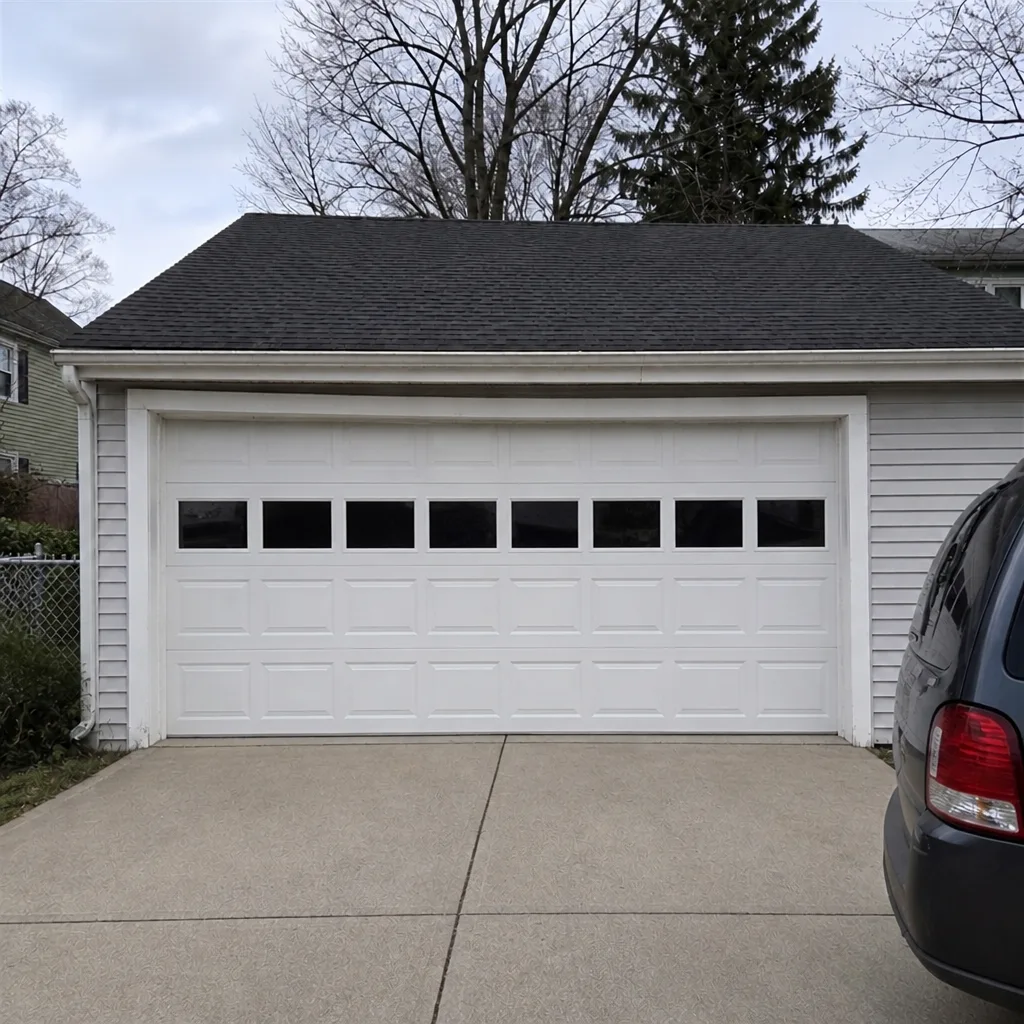 After
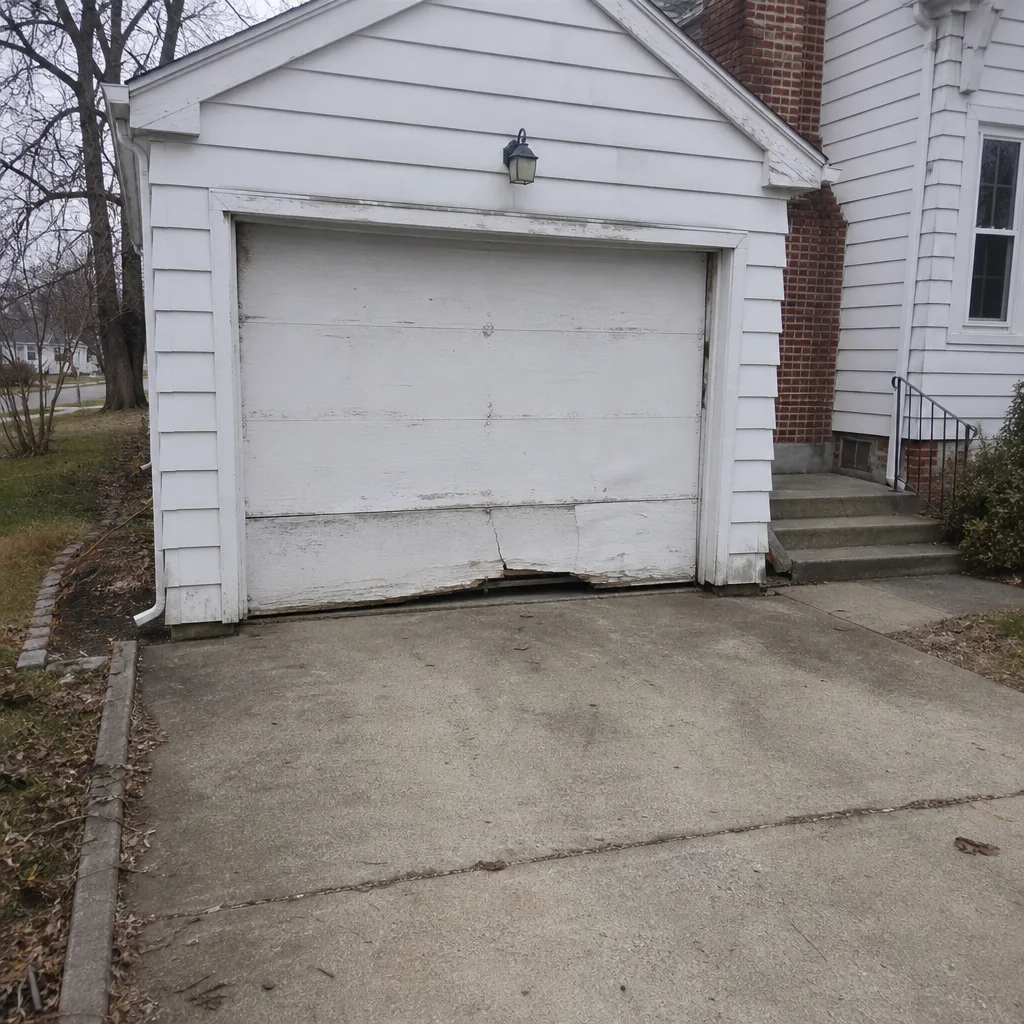 Before
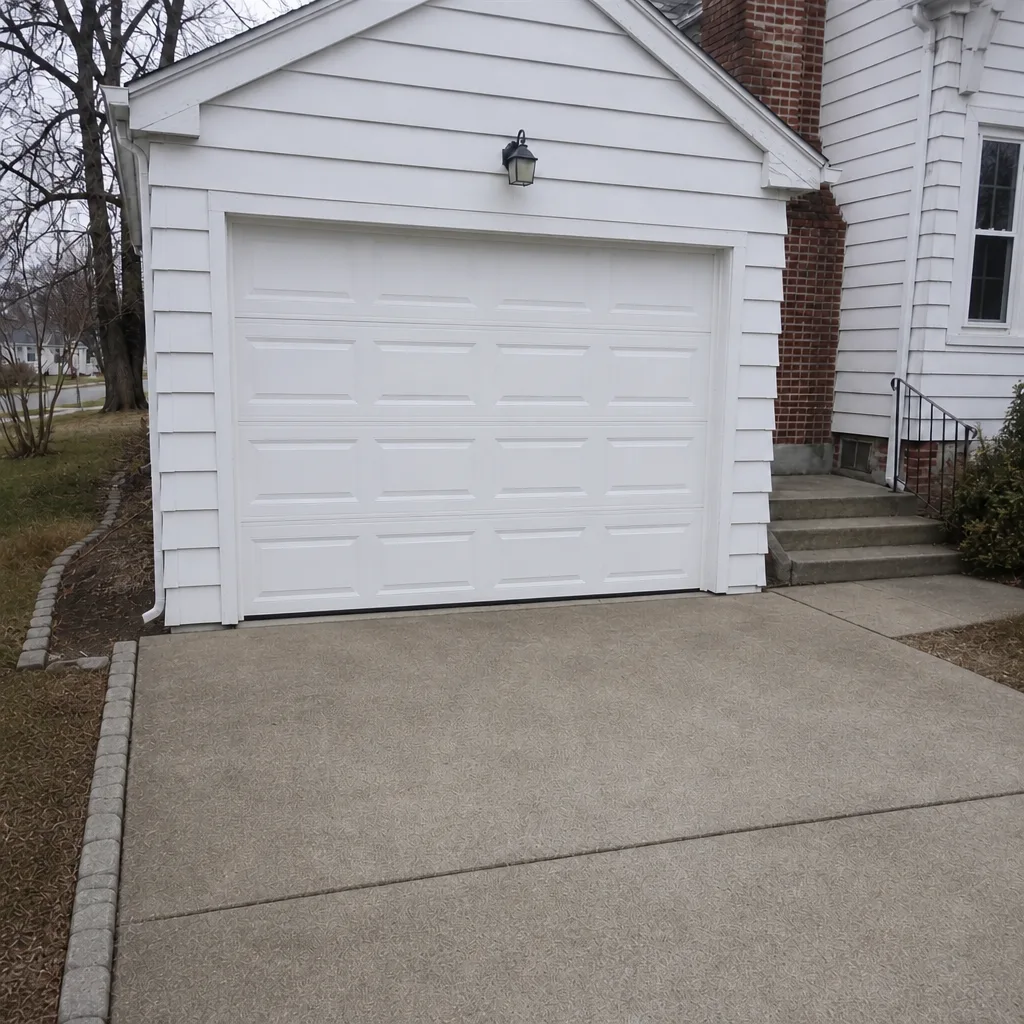 After
Common Mistakes to Avoid
- Treating the garage door like a woodworking project. Springs, cables, and torsion bars behave differently from any other home maintenance system, and the failures are much faster. If you’re hesitant on a spring job, that’s the right instinct.
- Removing the track thinking it’s a quick fix. Once the track is off, the door will come down, and the drums and cables will rapidly lose tension. Never unbolt a track without first relieving the spring tension, and that’s professional work.
- Replacing one spring when both are worn. Springs on a door wear together. Replacing one and leaving the other is a short-term repair that usually leads to a second failure within months.
- Buying a random bottom seal online without measuring. Quincy’s older concrete is often uneven, and a seal that’s two inches too narrow leaves a gap at one end. Measure the whole opening, and the retainer, not just the door.
- Greasuring the track. Lubricant on the track collects dust and slows the door down. The track should be clean and dry, the rollers and hinges should be lubricated.
- Ignoring the framing on an older garage. A door installed into soft wood behind a good-looking trim board will pull free. Re-anchor into solid framing, or expect a call from a professional in the next year.
- Installing an opener without checking the wiring and the force limit. The force limit protects the door, and it protects people. If you install an opener and the force limit is set too high, the safety reverse won’t work the way it should, and the warranty will often not cover the resulting damage.
When to Call a Professional
Call for anything involving springs, cables, drums, track realignment, or a door that has dropped out of balance and can’t be raised easily. Call for a door that’s hanging off one side, a door that has come off a roller, or a door panel that’s been dented from impact. Call for any opener that hums and doesn’t move, or reverses for no reason, or won’t respond to a remote you’ve already reprogrammed. And call if you’re considering a self-installed opener or door and want a proper measure first. Quincy Garage Door Service offers free estimates in Quincy. For a door that’s stuck open or hanging, call (844) 755-5234. We answer 24/7. Fast dispatch from 7am to 7pm, Sunday through Friday.
See Also
If you’re specifically weighing a repair, our garage door repair page covers what goes into a diagnostic visit. If the issue is the opener rather than the door, garage door opener repair walks through the common failure points on LiftMaster and Chamberlain systems. For the wider view of what we do, Quincy Garage Door Service lays out the three service categories we handle.
Frequently Asked Questions
No. Watching videos doesn’t change the fact that the spring is under hundreds of pounds of stored torque and can release in a fraction of a second while you’re holding a winding bar. Training and the right tools are what make the job safe, not information. Call a professional.
Typical estimates for a single torsion spring replacement in the Quincy area run from $180 to $340, and a matched pair is usually replaced together at about twice that, since springs wear out at the same rate. The written estimate sets the final price, and it’s agreed before any work starts. Call (844) 755-5234 for an exact quote; estimates are free.
If the door is very heavy to lift, won’t stay up when you raise it a few feet, or there’s a visible gap in one of the two springs above the door, the spring is broken. Try lifting the door six inches by hand with the opener disconnected. If it feels like lifting 150 pounds, that’s the answer. Ask a professional before you try anything else with it.
It can, and in many cases it does. LiftMaster and Chamberlain write their warranties on the assumption of professional installation, correct rail length, and correct force-limit setting. The specifics vary by model, so check the paperwork for the unit you own before you open the box.
Usually. A door that’s stuck open, hanging at an angle, or blocked in the driveway is a same-day priority. Call (844) 755-5234 and we’ll book you into the next opening, Sunday through Friday, 7am to 7pm. We answer 24/7.
For maintenance jobs like lubrication, bottom seals, and sensor alignment, DIY is typically cheaper. For anything involving springs, cables, or track work, the professional estimate is usually lower once you add up the tools, disposal, second-trip fasteners, and the risk of a misdiagnosis that leads to replacing the wrong part. Call (844) 755-5234 for a free estimate on the repair side.
Reprogram or replace the remote battery, check that the sensor LEDs on both sides are lit, and try the door with the opener disconnected to see if it lifts easily by hand. If it feels heavy or the door hangs, stop testing and call. If it feels normal but the opener misbehaves, the issue is probably the opener and we’ll want the brand and model ready when you call.
How to decide in five minutes
If the task is lubrication, a bottom seal, a sensor, weatherstripping, or a visual inspection, do it yourself. Those tasks don’t involve stored energy, they don’t invalidate warranties, and the worst-case outcome is a second trip to the hardware store.
If the task is a torsion spring, an extension spring, a lift cable, track realignment, panel replacement on a loaded door, or a new opener or door installation, call a professional. The mechanical reasons are specific: stored energy, loaded hardware, and manufacturer warranties that assume professional installation. The Quincy-specific reasons are just as specific: older framing, uneven slabs, non-standard opening sizes, and garages that look fine until you get behind the trim.
Our technicians have up to 15 years of experience and work on the systems homeowners in Quincy actually own, including LiftMaster, Chamberlain, Genie, and Clopay products. A free estimate is the fastest way to know what a job really involves before you commit to it. Call (844) 755-5234. We answer 24/7. Fast dispatch from 7am to 7pm, Sunday through Friday.
Written by the team at Quincy Garage Door Service.